5 Themes: Theme #2 Total Exhaustion

Weariness
Weariness is what I am seeing in so many colleagues. A chronic weariness. As we serve others, we will certainly tire . But is chronic weariness a proper, Christ-like way to live and serve?

We know better than to let ourselves get so run down, so why do we do  it?

I am going to venture the cause in a word: Need.img_2567


What Drives You?

Here are two ways we can allow need to drive us to ill health: Need for identity and the needs of the world.

Need for identity
Without a proper orientation in one’s personal identity, improper sources will be perpetually tapped. God has created us to be seen and known. We need a healthy identity. All of us, to some degree, have a misplaced identity. So what is the source of our identity? Here are two unhealthy ways we bolster a false-id:

1). I need to be needed. For caregivers this is deadly. Is it more comfortable caring for others than being cared for? Maybe you provide others’ debriefings, counsel, spiritual direction, and trainings. But who is your debriefer, counselor, spiritual director, and teacher? If you have none, that is a monster warning right there. We must be master receivers to be healthy and wise givers (see previous post here).

2) I need to be recognized, affirmed and approved. So I perform for it.  Constantly monitoring for feedback is addictive and destructive. This need will kill us because just as soon as the previous applause fades we need our next fix. God provides affirmation and approval for us. To the degree we have limited capacity to receive his love and affirmation is the degree we will be driven to seek it elsewhere.

Bottom line: without an expanding identity as an adopted son or daughter of the Father, we will live out of unhealthy identities.

Needs of the world
This is a second need-driven temptation. We live in a landscape strewn with needs. As caregivers we have professional capacity to address many of those needs. But 1 +1 ≠ 2 in this equation. This is not simple math, it is exponential demand. If we live our lives in reaction to needs, then we are seldom intentional. The words “No, I am not available” become all to foreign a statement in our vernacular.

Need does not constitute calling. 

Just because there is a need does not mean I am the one to tend to it. I long ago learned that just because “I can” does not mean “I should.” For example, just because I have 5 days between ministry gigs does not mean I should wedge another commitment in there if asked to.

Be need-informed but not need-driven.

Another Way to Live: Jesus was Not Need-Driven

Jesus’ identity: This is Trinitarian theology at its most basic and sweetest. Jesus has been loved by the Father for all eternity. Jesus knows he is Son, he has a Father to prove it.

Guess what, so too for you. Check out Jesus’ words:

“I have made you (Father) known to them, and will continue to make you known in order that the love you have for me may be in them and that I myself may be in them.” John 17:26

One reason for Jesus to be incarnate is to show us the Father. He showed us that the Father loves us adopted ones with the same love he loves his Son. Eternally, unconditionally, preemptively, pursuantly, persistently.

Until one is fully aware, by the Spirit, that they are the beloved daughter or son of the Father, that there is nothing to prove, nothing to earn, one will persistently seek identity in other sources. Simple as that.

Jesus was not need driven: Yes, he did address many needs while on earth, and of course he is the Savior of the world. Yet, Jesus did not meet every need he came across even though he is the only one in history who could have. Needs did not constitute what he did. What drove Jesus? What directed his steps each day? I suggest you read the gospel of John very slowly and deliberately looking for the answer to that question. Here are a few hints:

John 5:19-20 “Jesus gave them this answer: ‘Very truly I tell you, the Son can do nothing by himself; he can do only what he sees his Father doing, because whatever the Father does the Son also does. 20 For the Father loves the Son and shows him all he does.'” 

John 14:10 “Don’t you believe that I am in the Father, and that the Father is in me? The words I say to you I do not speak on my own authority.Rather, it is the Father, living in me, who is doing his work.”

John 14:31 “The world may learn that I love the Father and do exactly what my Father has commanded me.”

The Son was Father-driven, not need-driven. True for Son, true for sons and daughters.

It is possible  to live a life where our steps are directed by the Father.  Jesus’ life was not a frenetic, exhausting drive to meet hoards of needs. Ours is not to be either.

A Little Self-Reflection 

What is the level of your weariness?

What is the depth of your identity in the Father’s love? How are you growing in this truth? How open are you to being loved by him? How do you block yourself off from his love? If you were to lose your job today, what would be your source of identity?

How unconsciously reactionary to needs are you? How much do you wait on God to show you what needs to address? How much do you hear from God to “go here and do this” vs. you deciding on your own where to go and what to do?

Posted in Living Wisely, Personal Vitality, Shepherding Well, Spiritual Vitality, The Shepherd's Health, Thinking Well | Tagged , , , , , | 2 Comments

5 Themes: Addressing Spiritual Thinness

(This is one of a five part serious on responding to thematic issues affecting member care provider’s and cross-cultural worker’s health and effectiveness. You can read the intro.)

This much is true in creation: Input must exceed output.

Consider a farmer’s field.

A river.

Or maybe a camel.

In order for a farmer’s field to continue to yield fruit, it must be receive fresh nutrients.

In img_6274order for a rive to flow it requires snow melt or rain.

A camel can go immense distances before drinking, but it must eventually be watered.

Without sufficient nutrients the
farmer’s harvest is minimal.

Without water, the river runs dry.

Without being watered, the camel will eventually die.

So too the human being.

Over the course of one’s life, input must exceed output.

Physically we need sleep, food, water, warmth.

Emotionally we are created to desire encouragement, community, and identity.

So too the soul.

Spiritually we are created to be tended to. We are created dependent. We spend all of our life repenting of self-determination and self-reliance. Paul was about 30 years into his life in Christ when he wrote in 2 Corinthians 1:8-9 that God allowed him and his teammates to be pushed to their limits so that they could “learn to not rely upon ourselves but on God who raises the dead.”

So too for you and me. Input must exceed output. We can’t go and go without rest and renewal. Yet the evangelical work ethic is such that we are cajoled to do more and more, faster and faster, bigger and better. Even if someone else is not pushing us, then the internal voice drives us.

Over the tenure of a week, a month, a year, a career, input must exceed output. 

“If you are failing to feed your soul, while at the same time you are handling sacred responsibilities, the disconnect will finally become too much.”                                             Morris Dirks in Forming the Leader’s Soul

Jesus stood and said in a loud voice, ‘Let anyone who is thirsty come to me and drink. Whoever believes in me, as Scripture has said, rivers of living water will flow from within them (John 7:37-38).’” John clarifies that he is speaking of the Holy Spirit. Is your life overflowing with the Spirit of the resurrected Christ?

My personal experience is that everywhere I go, yes, everywhere I go, I am engaged by people who are sorely depleted. Their output far exceeds their input. This dynamic is not merely spiritual, its more rudimentary than that. They are not getting enough sleep nor physical exercise. They are hurried and restless. Their souls are thirsty. So are their emotional lives  and, consequently, their relationships. What’s more, I see this thematically amongst those who shepherd them and lead them. Lots of avoidable breakdowns.

Who will model a different way to live and serve?

Yes, I am called to lay my life down for others. But do I even have a life to lay down? Or are others merely experiencing a weary, frenetic version of me? When I am with others do they experience the overflow of Christ?

img_9877What can you do so that over the long haul input exceeds output?

What life habits of restlessness must be repented of?

What simple habits of abiding in Jesus can be cultivated, especially “at work?”

I offer three suggestions, even four:


  • Time being addressed by God’s Word. The vast majority of cross-cultural workers (and member care providers) I engage have minimal biblically literacy. This is not merely about Scripture memorization. It is about being in the word such that our lives become saturated with the Truth.  How much time do you spend each week  studying Scripture in depth? Do your presentations and counsel  quote a passage here and there, or is it Scripturally saturated? I am not talking about being a Scripture quote machine – that comes off overly spiritualistic. I mean that we have been so much with God in his word that our lives bleed it in word, deed, and presence. Don’t have time for this luxury you say? Then I implore you to reconsider your life commitments.

Unknown

  • Time with God. As we are addressed by the word,  we seek to move from what might be largely a cerebral engagement with the Bible to a relational, heart-engagement with God. He is there. He is waiting for us (See Isaiah 30:18 for example). Are your prayers such that you are moving from head to heart with God?
  • Time in meaningful conversation with others. We all need “advisors” in our lives. Some of those can be peers, some coaches/mentors/spiritual directors, some a small group, some the generation following us. Who are you sharing life with? Who is asking you hard questions, not to help you manage your sin, but rather inviting you to open your heart to God and others?
  • Pausing at different times amidst your daily work, not to stair blankly at your cell phone screen, but to quiet and still yourself in God’s presence. Where has he shown himself to you? When has he provided? What is he up to in you and around you? Pause and thank him. Acknowledge his prior work around you. Ask him for grace to remain abidingly mindful of him as you resume your work.

These are but four suggestions. There are hoards more (such as hobbies, vacations, sabbath, retreats, etc. etc.)

How will input exceed output in your life? How will 2017 look noticeably different than last year?

Posted in Living Wisely, Personal Vitality, Shepherding Well, Spiritual Vitality, The Shepherd's Health, Thinking Well | Tagged , , , , , , , , , , , , , , , , | 7 Comments

Revisiting 5 Themes of Ill Health Amongst Global Workers

A couple of years ago I posted five entries on five themes I saw consistently amongst global workers that cause or lead to ill health and ineffectiveness. Some of these entries are the most read on this sight. Below is the list of the five topics, the first two being the most repeatedly viewed:

  1. Spiritual Anemia
  2. Total Exhaustion
  3. Relationships in Crisis
  4. Identity attached to Role and Responsibility
  5. Lack of Permission for Personal Development and Care

Based on the first two being the most viewed, we may be a spiritually thin, tired bunch.

I am going to revisit these themes with some reflections and resources on what I have learned and observed over the past couple of years.

The Interesting Observation of these Same Themes Amongst Member Care Providers
I have increasingly been investing more time in training, coaching, mentoring, and advising other member care providers. What I have quickly observed is that these five img_1959themes are just as recognizable in member care workers as they are in  grass-roots, front-line worker, or even organizational leadership.

This fact speaks loudly to two realities.

First, this work we do as caregiver,  cross-cultural workers, and leaders is demanding, costly, complex work. We cannot expect to lean into this work and not experience hurts and adversities of various kinds. Suffering is to be expected.

I was recently with a group of workers, largely member care providers, in a Southern European city. There was discussion around the difference in one being tired in one’s work and one being chronically weary. If I give my life to others, I will tire. If I do so in a manner that leaves me chronically thin spiritually, emotionally, and sometimes even physically, then some elements of my life may be out of sync.

This latter dynamics speaks to the second reality which is that of the compulsive, frenetic work ethic in the Evangelical ministry world. Whether I speak to pastors, global workers, executive leaders, member care providers, clinicians, teachers, whomever, I consistently see many of these five themes in their lives. Why is this?  Are we helpless to the strong pull of needs without any hope of living a deeper life? Conflict may be unavoidable, but must it lead to relational disintegration? Must it be that our work loads are so intense, so demanding that there is literally little to no room for one’s own health and growth?

Is There Another Way to Live Well?
img_2546-1The Canadian novelist Michael  O’Brien writes that our lives as Christ-followers can be “icons, a message of contradiction and consolation” to the world. Tish Warren writes that
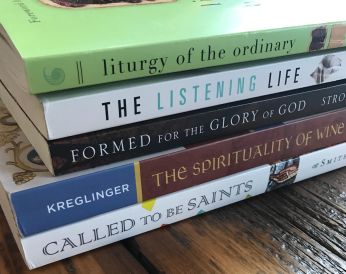
we are not to merely be “alternative consumers.” If we live the same pace, the same lifestyle, and consume life just like the rest of the world (just more moral stuff, of course), are we really any different than the world system?

Over the coming weeks, we will lean into these five themes again and wrestle with the paradox of living well in Christ as we lay our lives down in a volatile, needy world.


A Little Help, Please?
Would you mind doing me a favor? Please pass on this sight to two or three other colleagues or friends. It would be encouraging to me to see an uptick in the readership – that is if you think it worth other’s time. If not, I’d benefit from constructive feedback to make this a more helpful resource to all. Thanks all around!

Pax e Bonum in 2017

Scott

Posted in Shepherding Well | 10 Comments

2016 Reads List

unnamedAnnually I write up a brief review of books I have read. Attached is this year’s version. I have also included a “top-five” of the most influential titles in my life from recent years.

I would love to hear from you any titles you enjoyed of late. Thank you!

Peace to you this New Year.

Scott

scott-e-shaum-2016-reads-list

Posted in Shepherding Well | 4 Comments

What I would Tell My Younger Self

Hindsight is  a wonderful gift.  I have reflected on what I would have done differently in my younger years. Actually, it is not so much what I would have done, but more how I would have lived. Here’s my list:

  • Slow down! What is the rush after all??!! No need to try to conquer your world in a day. I have learned much in the past 10 years of the wisdom in slowing down the april-1967decision making process, the response time, the expression of my opinions, and much of else in life. I used to go for morning runs. Now I walk. Amazing how much more I see along the way….That’s a good metaphor for life.

  • Savor life. Everything from a meal to a road trip to a lingering conversation is to be savored. God has been teaching more deeply lately that life is to be experienced, not consumed. That is a tough lesson for one shaped by a consumer culture.  Contemplation is savoring. That goes for prayer and all of life.
  • Don’t push yourself. My unconscious motto used to be “if I can do it I probably should.” Now I know that just because “I can” does not necessarily mean “I  should.” I used to push myself so hard in sports, work, everything. Do more, bigger, better, faster. That is not necessarily wise living.
  • Keep reading and learning. My formal education gave me a foundation for learning the rest of my life. I have learned to give myself permission to create space to read and learn in as many venues as I can. Whatever it takes, keep learning. Those who finish well are life-long learners. Further, as we age it is required we learn from those younger than us. After all, the demographic is going to be increasingly younger around us, so be willing to learn new ways of doing things from the next gen.
  • Keep your nose in the Word. Study the word. Break out a commentary and dig in. Often. Deep. Repeatedly. Be a woman or man of the word. Allow it to flavor everything you do. Hard work? For sure. Takes a lot of time? Yep. The fruit is worth it. Also, sit with God afterwards. Move from cerebral engagement to heart engagement with God everyday from the Word.
  • It’s OK, some things take years to grow in. I was always in a rush to grow up. I would complain to God, “Look, you can see what’s wrong with me, and you haver shown me where I need to mature, so let’s move this thing along and grow me up!”  Not very patient, was I? A tad arrogant as well. God is urgent in his redemptive work, but seldom in a hurry. It takes all of our lives to mature. So be gracious with yourself. Be patient. God’s work is a slow, deep work.
  • Relationships are everything. Period. It’s all about relationships. It is never about the product, the program, the task. In fact all those efforts are meant to enhance relationship. Always make it about God and people.

Those are some of my words of wisdom to a younger me. What would you say to your younger self? I’d love to hear your thoughts.


Posted in Living Wisely | Tagged , , , , , , , , , , , , , , , | 2 Comments

A Waiting Posture

“Be still before the Lord and wait patiently for him”  Psalm 37:7

One of the more uncomfortable postures in life is that of waiting. Waiting for a follow-up phone call on a job interview. Waiting for the doctor to call with the test results. Waiting img_0801for God to do something, anything, as we struggle on in a time of trial.

We simply are not practiced at waiting. Our globalization does not help in any of this either. We have instant most everything with that phone in the palm of our hands.

In God’s wisdom he often allows us to have to wait. Wise are those who intentionally wait on God.

God Waits on Us

“Yet the Lord waits to be gracious to you;
    therefore he will rise up to show you compassion.
For the Lord is a God of justice.
    Blessed are all who wait for him!” Isaiah 30:18

Did you know that God waits for us? The word “wait” in the above passage can also be translated “to long.”  God longs to be gracious to us, he waits to be gracious towards us.

When we wait for God we are waiting on the One who has been waiting for us far longer. He is patient, kind, merciful, gentle – longing to extend grace to us. Don’t miss the beatitude in this verse – those who wait on and long for God are blessed.

Waiting is a specific act of humility. Waiting demonstrates that we cannot live our lives on our own initiative. We wait for God to show us the way to walk (See Isaiah 30:20-21).

An Advent Practice of Waiting

Waiting is one of the themes of Advent. This Sunday, 27 November, is the first Sunday of Advent. There are many who are accustomed to adding extra practices during Lent. What about Advent? We have four weeks leading up to Christmas Day that we could create a little extra space to sit still, quietly, in a posture of waiting for God.

What would it look like for you to do that? Maybe add a little extra time to the morning routine to sit quietly with an inner posture of waiting.  I like to take extra time to read through journals, ponder the past year’s schedule and key events with an eye of evaluation and reflection on what God is up to in and through my life. I am seeking to hear from God during this time. Built into much of this exercise is time to wait still, quiet before the Lord. This time of annual review becomes a place of writing out prayers to linger over in the coming year in an effort to follow where I sense God is redemptively working.

How about you? How could the capacity of your soul toward waiting on God be grown in this season?

May your advent be one of experiencing the God who longingly waits to be gracious to you.

Posted in Living Wisely, Personal Vitality, Spiritual Vitality, The Shepherd's Health, Thinking Well | Tagged , , , , , , , , , , , , | 2 Comments

Forgive, For We all Mess Up

One of the marks of resiliency in any environment is the willingness to be gracious and forgive. In other words, lack of forgiveness is a major cause of attrition. 
I often say that it is not a matter of if I will have to say I’m sorry today, but how often.

We all mess up. Let me say that a little more straight: We all sin relationally. Daily. Period.

“Forgive one another even as God has forgiven you in Christ Jesus.” Ephesians 4:32

Our Reality
img_1249Recently I was facilitating a training of a room full of fellow caregivers from around the world and multiple organizations. When we looked at the various topics we had addressed in the past 12 months in our work, interpersonal conflict was far and away the most common topic.

There is a mountainous quantity of unresolved conflict out there. You have likely experienced that fact yourself.  This reality is undermining the influence of the gospel globally.


How ‘Bout You?
Just ponder for a moment: Who have you been angry with, frustrated, hurt, or otherwise offended by of late? Is your primary desire one of revenge (come on, admit to yourself how you have been fantasizing about giving that person a piece of your mind)? Our sense of justice can be very strong in such instances.

Of course, when the sides are switched and we have been the offender, we can come up with an endless list of defenses that explain our actions. Huh. Peculiar.

The Facts
You and I have been forgiven an endless stream of sinful acts.

We are a forgiven people.

Our God is a forgiving God.

We are to forgive others in the same manner we have been forgiven.

Period.

Yes, I understand the complexity of some situations – abuses, neglects, traumatic offronts. I am referring to the day-in-day-out relational stuff that is inhibiting our teams and communities around the world. If you are a MK/TCK specialist I am sure you see the family impact on this subject as well. Lack of forgiveness is hitting marriages and kids hard too.

It takes courage, but…
Let’s lean into this, brothers, sisters. Who needs to hear from you, “That hurt.”img_0676

Then we follow that up with these words, “I forgive you.” It staggers me how hard it is to say those three words sometimes.

Sure, often the offense recycles in us. So I pray about it. The key is to ask God to shape a gracious and forgiving heart and posture toward others.

This is Huge
Without us deliberately leaning into this issue of forgiveness, the impact will remain. The impact is on two fronts:

First, followers of Jesus will miss out on an essential opportunity to model the reality of a gracious, loving, forgiving God. The gospel is undermined. The world longs to see forgiveness lived out in real time and real life.

Second, unresolved conflict will remain a primary factor in attrition amongst global workers.

Shepherds, How art Thou?
Obviously, we shepherds must live this. We cannot do this on our own. Grace is a Person. Forgiving is a supernatural act. We need Jesus big on this. Seek him. Who do you need to forgive?  How will you invite Jesus into that?

As you tend to others, ask what unresolved relational tensions exist. Be a peacemaker. Facilitate unity. Fight for reconciliation.

May the world see a forgiving people of a forgiving God.

Posted in Living Wisely, Personal Vitality, Shepherding Well, Spiritual Vitality, The Shepherd's Health | Tagged , , , , , , , , , , , , , , , | 3 Comments

Acting on Humility: Casting Practice

Humble yourselves, therefore, under God’s mighty hand, that he may lift you up in due time. Cast all your anxiety on him because he cares for you.
1 Peter 5:6-7

Humility is the awareness of who we are in juxtaposition to who God is.

Worries
On any given night I might find myself lying awake pondering life’s challenges. Finances, kids, ministry responsibilities, health concerns, on and on. I’d rather just sleep. But there I lay with my tired brain clicking away. Can you relate?

Peter states that a practical expression of humility is casting all of our cares upon God. Self-reliance is the opposite of humility. Keeping our cares to ourselves is self-reliance. The reality is that we are creatures that live in a constant state of dependency. There is nothing within us that makes us self-sustaining. We do not have what it takes within ourselves to navigate this life on our own.

Biblical Theme
I cannot think of one passage that exhorts us to pray for humility (if you can think of one, pray do share). On the other hand, we are consistently commanded to be humble. These passages come to mind:

“Finally, all of you, be like-minded, be sympathetic, love one another, be compassionate and humble.” 1 Peter 3:8

“In the same way, you who are younger, submit yourselves to your elders. All of you humble yourselves one toward another, because God opposes the proud but shows favor to the humble.” 1 Peter 5:4

Humble yourself under the mighty hand of God.” 1 Peter 5:6

Humble yourselves before the Lord, and he will lift you up.” James 4:10

Be completely humble and gentle; be patient, bearing with one another in love.” Ephesians 4:2

These are very clear directives. Humility is to be practiced. It is a choice.

One of the most accessible ways to walk in humility is to deliberately maintain a posture of openness toward God. A persistent confession of poverty is a healthy expression of reality. Being deliberately dependent on God and before others are expressed acts of humility.

Casting Practiceimg_6760
What cares can you be casting upon God? Be thorough, down to the smallest details of life.

As others share their stories laced with various burdens, pause at times and pray with them. Invite them to express to God the cares they live with. Remind them that they have a Father who feeds the ravens and adorns the flowers, and he cares for them so much more.

A subtle temptation of our caregiving work is the dreaded messiah complex. People do not ultimately need us nor our expertise. Who they need is Jesus. Our person and expertise are a means by which to bring Jesus to others and others to Jesus. An acute awareness of one’s personal brokenness and poverty goes a long ways toward that desired end.

A fair measure of success is that we and those we tend to are growing in humility. That is to say in becoming master casters of care upon God.

Cast all of your cares upon your Father, for he cares for you.

Posted in Shepherding Well | 4 Comments