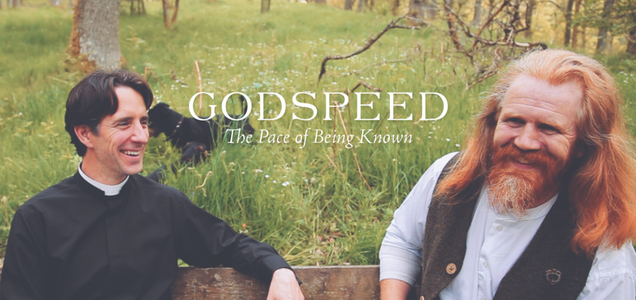
Watch Godspeed
“Godspeed was shot in three days, in three villages, by three friends. What began as a five minute video ended as a half-hour portrait of the people and places who had taught Matt to repent & rest.”
Ours is a Personal, Immediate God
We do not promote deism – the belief in a supreme being who wound up creation then let it go on its own; a god who is aloof, passive and distant. Ours is a Father-God who is not only present but pursuant; who is a powerful, loving Presence with us in our daily lives.
His actions amongst us are both specific and practical for he knows us each by name.
Psalm 62
Psalm 62 is a wonderful expression of this truth in real time amidst real life.
For God alone my soul waits in silence;
from him comes my salvation. 62:1
James L. Mays (Interpretation Bible Commentary, John Knox Press 1994) is one of my favorite commentators on the Psalms. He clarifies that the translation “wait in silence” misses the Hebrew meaning. The Hebrew does not mean verbal silence. Nor is waiting implied. What the Psalmist is experiencing has already been completed. The meaning rather speaks of a quietness of soul, an inner stillness that comes from yielding fears and anxieties to God as an in-the-moment act of trust.
Verse 5 is extremely similar in verbiage:
For God alone, O my soul, wait in silence,
for my hope is from him.
This verse is spoken to self; a soliloquy to remind oneself of the truth; a trusting response amidst a world that is hostile and deceitful. A helpful rendition is: “Truly, O my soul, rest in God, for from him alone is your hope.”
Real Time Trust
There is no one and no thing in this world that will provide hope let alone a rested, still soul. Our world facilities the opposite.
We are dealt an onslaught of information that has a fear-formation upon us. The under

pinnings of our true identities as known, rescued ones is eroded.
These dark messages depersonalize us. Our God always particularizes us. Note how personally David experienced our God:
So David encourages us:
Trust in him at all times, O people; pour out your heart before him;
God is a refuge for us. Selah (62:8)
Certainties
We will experience troubles in this world. Dark forces will oppress us. Others will seek to “batter” us (v. 3). Lies from without and within will assail us. These are to expected.
There is a greater One still. Psalm 62:11-12 is a strong theological summary about the Person of God:
Once God has spoken;
twice have I heard this:
that power belongs to God,
and that to you, O Lord, belongs steadfast love.
For you will render to a man
according to his work.
God is powerful – he is able. God is loving – he is willing. These traits belong to God alone. Other forces will feign power over us, but it is a smoke screen. God will reward us according to our work – which is to say, whether we trust and hope in him or in our own devices to make life work on our own (Compare Isaiah 50:10-11).
As we trust him in real time amidst real life adversities, he offers to us his Presence
which can bear within us a rested, still soul. Our daily practices of being immersed in his Presence and his Word are means of orientation as we head into a hostile and deceitful world.
May you know this rest and stillness from the One who is your Hope alone.
Shepherds: As you sit with others and hear their stories, may you
be bearers of this hope: “Truly my soul is at rest in God, for he alone is my salvation.”
The God of Limits
It is a truth that our infinite God made finitude such an essential aspect of all creation. Rivers flow where God deigns them and they flow to oceans that are bounded by land.
Our atmosphere eventually runs thin the higher one goes, as does our energies as we age. God has filled creation with limits.
Wisdom to Live Within
We know from Colossians 1 that all things were created by God, for God and are held together by God. He sustains everything we see. It is wise for everything created to remain utterly dependent and responsive to the Creator. To submit to God’s design for our lives is a wise response. God knows this – he knows it is for our own good to live within his wisely designed constraints.
Even Jesus lived within limits in his incarnation. He only did what his Father showed him to do (see John 5:19, 30 for example), he slept as he tired, he was only in one place at one time.
Foolish Determinations
In my youth I knew “no bounds.” Limits were there but I was determined in what I wanted to do and relentless about when I wanted to do it and how I wanted to do it. If I even smelled a limitation I doubled down. My life motto was “try harder.” That was (past-tense) a grace and mercy, all that unbridled zest for life allowed for a lot to get done – like work all day then parent three energetic boys into the night day after day after day. Now it makes me tired just thinking about it.
God knows it is not wisdom to live this way all our our life. God is inviting us to a wiser life motto than “just do more.”
Expanding Limitations
Why is that as we age our limitations increase? God is the sustaining God. He sustains the sun’s energy for thousands upon thousands of years so why does he not sustain our
energy? Why do we bump into our limits more now than ever as we age? These are questions too great for us, but if we listen to the tenure of Scripture we’d note that output is never God’s ultimate concern. Relationship always is God’s deepest, first and foremost longing.
I have been made aware that despite diminished energies I can still have the most fruitful years ahead of me. How is that possible? God brings fruitfulness not by frenetic activity. Fruitfulness comes from deeper relationship.
Everyday Practice
This reflection on our limits and depency has innumerable applications. We grow in dependency along this “Via Limatiatio.” The sooner we allow God to move us from
resistance to resignation to embracing our limits the sooner we can not only grow in wisdom but even in vitality and impact. Kind of paradoxical, isn’t it?
Are you aware of your limits? Financially? Emotionally? Spiritually? Relationally? Professionally? Organizationally? Maybe these are not curses but blessings. What is God protecting you from with these limits?
How is the Spirit inviting you to live within these God-created realities? What would a wise and loving response to him be?
If you lived well within your limits over the long-haul, how could your personal and professional worlds demonstrated vibrancy?
As always, I’d love to hear your thoughts. Thanks for reading.
Everyone suffers. We are invited to sacrifice.
When we add the layer of active service to others in the name of Jesus, then we must add the reality that we will experience pains in the act of that service.
Somehow we have an idealism that thinks that if we do what God asks us to do, then it will go well for us. That was not the case of Jesus nor the Apostles. They all were in some manner misunderstood and mistreated by the very ones they were seeking to help.
We will too.
“In this world you will have many troubles,” Jesus said plaining in John 16:33.
That is an iron-clad guarantee.
Expectations and Willingness
It is wise to prepare ourselves for that which Jesus has sought to prepare us for. We will experience all sorts of hurts in the act of serving others.
Expectations can be helpful here. Hurts will still hurt. But maybe there will be less of a whiplash effect when it happens. And maybe the gap between what we have experienced and our responding well to it can be shortened.
Personal Application
It is well documented that a theology of risk and suffering personally applied to one’s life increases resiliency and in turn retention. Have you wrestled through these topics for your own personal life and public ministry?
How have you appropriated the truth that you will suffer in this fallen world? That your friends, spouse, children, and teammates will too?
Are you willing to sacrifice, even suffer, as you care for others?
Are you willing to suffer at the hands of the ones you are caring for?
These questions invite a lingering, praying attention. Idealism and naiveté will let us down.
The goal in life is not to remove tensions and pain. That is impossible. The opportunity is to walk well with God, others, and self amidst those tensions. God invites us to a noble life of trusting him in self-sacrificing service to others for Jesus.
I submit a brief story of how I was confronted with this recently.
A Faith Challenge
My wife and I just returned home from a 5 week road trip. Leading up to that road trip I had been leaning in heavy on some writing projects (on suffering no less). The more I pressed into these projects the more we were experiencing personal backlash physically, emotional and spiritually. As the departure for the trip drew closer, I found myself wondering if we should just cancel. The physical limitations I live with were really flaring. I did not feel well at all. The thought of lengthy international travel was not appealing. Its not a friendly world out there. I really wanted to just stay in my hobbit hole where it is warm, quiet and predictable.
Within me, however, I was aware of a very quiet yet firm invitation to faith. God was inviting me to once again trust him. Would I go? Would I be willing to serve whomever he brought my way no matter how poorly I felt? Would I be willing to risk it and venture out of this “safe” hobbit hole once again? Would I trust him for daily provision?
We went. We both felt crummy at times. He provided daily.
Each of us will need to discern what God is inviting us to, where he is inviting us to lay our lives down, and how we can rely upon him as we do so.
“So she called the name of the Lord who spoke to her, ‘You are a God of seeing,’ for she said, ‘Truly here I have seen him who looks after me.‘” Hagar in response to God’s care for her (Genesis 16:3)
God is Always Gazing Upon Us
When we contemplate God, that is to say gaze upon God, we are gazing upon the one who is always gazing upon us. When we ponder God, he is already pondering us. He contemplates us perpetually.
Paul exhorts us to “fix our mind on things above where Christ is seated at the right hand of the Father (Colossians 3:1-4).” When we do so, we are reminded that his mind is already fixed upon us.
He is always the initiator, we are always the responder.
Its All About the Relationship
There is much todo about contemplative spirituality in the Evangelical world today. At times I find I get lost in all these practices I am encouraged to be about: lectio divina, silence, solitude, contemplative prayer, etc. Those are good practices certainly. I engage in many of them.
Yet, I am reminded that in the end it is not about the practice but about the relationship. These practices are a means to an end. They facilitate my being with God, open and receptive towards him.
A Resource
If you struggle with this whole contemplative topic, or if you would like a more solid biblical
orientation, then I strongly encourage you to purchase and download this article from The Journal of Spiritual Formation and Soul Care. The article is $5 and can be downloaded as a pdf. The entire issue is worth the $15. JSFSC is a pricey journal ($30/year) but I have benefited immensely from my subscription over the years. But I digress…
Withholding Eye Contact
Witholding eye contact from someone can be a deliberate means of hurting another. It is generally a passive-aggressive way of relating. However, sometimes we are simply not aware that our attention is so adamatly desired.
Of course, God needs nothing from us. He is sufficient in himself. Yet, he opens himself up to us in relationship and invites us ever deeper in.
Imagine God always gazing upon us, eager for his gaze to be received and returned.
How are you responding to God’s gazing upon?
How are you returning his gaze?
What have your found helpful to facilitate your gazing upon God in your journey with him? Please share.
Below is a copy of the Facebook entry for the Wheaton College Resiliency study that Dr. Pam Edwards posted.
Hope you’ll contribute. Please share it around, it would be great to have solid data on his study. Thanks SS
|
|||
I have job security because, in part, there is a lack of organizational health.
That is a loud statement.
It is not an exaggeration that the majority, by a wide margin, of hurts I interface with at a personal level come at the hands of some level of organizational ill-health. You possibly experience the same.
How about your organization?
You Shape Organizational Health. Yes, You!
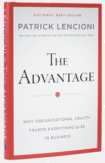
I am a big fan of Patrick Lencioni (you my know him from his best known title The Five Dysfunctions of a Team). His more recent book The Advantage is a culmination of many of his works. It is a brilliantly simple and essential book. Essential! 
You may feel tempted to check out because you are not an organizational leader. But wait! You are part of an organization. You can do what you can do to make your little corner of the organization healthy.
Lencioni argues that if you do that, the results will show and people will pay attention. Besides, with some simple know-how you can shepherd others through the mishmash of organizational illness.
Resources!
Lencioni’s group has just developed a new website loaded with practical tools. It is called The Hub.
If you only do one thing, listen to the 60 minute webinar he gave earlier this week (April 25). Here is the link.
As you listen, take notes. Lencioni is a believer and is deep into both the business and non-profit sector of the U.S. He is expounding simple wisdom, much of it very biblical.
He has some key words for non-profits – i.e. for sending and member care organizations like yours and mine. Those words come within the first 20 or 30 minutes of this webinar. They are gold. When not headed, the results are painful – at the organizational and personal level.
He also addresses what you can do if you are not the CEO or department head in bringing change. There are many good questions addressed that listeners sent in ahead of time that are very relevant to our world.
Member Care Providers Must Offer More than Problem Identification
We must be able to do more than point out the problems. Member care providers lose credibility amongst executive leadership when all we do is talk about what is wrong and do not do some of the heavy lifting of facilitating health for the organization, not just members of the organization.
Lencioni provides straight forward ways to facilitate health, IF, we lean into them with “courage and disciple” (his words). We can help foster not only personal health, but organizational health as well.
This is a monsterous issue for the cross-cultural ministry world. I’d love to hear your thoughts on organizational health and what member care folks can do to promote it.