The Essential Need of Character Growth

Coming Full Circle
If you have not read the post previous to this one, please take a moment to read it.

The heart of spiritual formation is union with Christ. Personal formation, or character  maturation, is a corollary of that relationship. That reality in no way diminishes the essential need for life-long character formation.

Competency does not Equate Character
We have all seen the scenario before. A person is profoundly competent. There is much effectiveness in their giftedness. Success piles upon success. Because of these successes, they are promoted.  Then, often, there is the crash. Adultery. Mismanagement of money. Manipulative abuse of others. Control. We have likely all experienced the impact of such scenarios. We see it in ourselves too.

Competency is not the same as character.

Competency is about what we can do.  Character is about who we are. We minister out of who we are, not merely what we know or do.

God’s Growing Process
Bobby Clinton’s The Making of a Leader explains a cycle God takes his people through. When we are young adults we learn new jobs, gifts, and skills. Sometimes we get promoted. However, higher levels of responsibility require more of us. Knowing how to get work done is not enough. So God brings along challenges to mature us. How are you going to respond to the co-worker who hurts you? How are you going to leverage promotion – for other’s gain or your own?

As we respond to God’s maturing processes, we might be given a few more responsibilities. But again, with greater influence must come maturer character. Another round of faith, obedience or other sorts of challenges come our way. I do not mean to overly simplify this into a formula. This cycle can give us the awareness of God’s activity in our life so we can join him in his redemptive work.

Thus is a life-long struggle of maturation. What we see with a leader who acts out in some unfathomable manner is the reality that competency-based promotion has outstripped character maturity. Likely the leader has been offered many opportunities to look in the mirror, confess character deficiencies, repent, seek counsel, and grow. Too often, in all the glitter and busyness, this sort of difficult processing gets pushed aside.

Intentional Character Formation
Before we go any further we must have a perspective check. This is usually where we like to identify the problem, work a plan, and get stuff done – even our own growth. The only IMG_4787problem  is that God is nowhere in the equation. It is all self-driven.

There is a danger in seeing all this as utilitarian: “If I just learn the lessons then I can get the promotion.” Remember, this is not about productivity. This is about communion with God. The primary response God is after when we experience success or trials is to draw closer to him, to confess our poverty and utter need for him. Remember, communion first, character formation as an overflow.

There is a difference between a successful leader and a mature successful leader. What
path are you on?

Two thoughts on Becoming Aware of  Character Deficiency
1). Ask God to show you. He will. His desire is to draw you deeper into himself. He desires your heart above all else.

2). Watch how you respond relationally. Character deficiency is primarily exposed in the context of relationship. Think about it. All sin is relational, against God and others.  A profoundly scary question to ask others that requires much discipline to not respond with anything other than clarifying questions and a heartfelt “thank you” is this: “What is it like to relate to me?” It’s best to prepare yourself well for the answers. People might be polite at first. If they are not afraid of you and you show yourself safe, they might be honest. If they are honest, you have been given a gift. Some of what is seen is beautiful, some not so much.

If you find yourself becoming defensive, well, there is a confirming area to be grown in….I’ve been busted on defensiveness often.

I’d love to hear your thoughts on the subject.

Posted in Living Wisely, Shepherding Well, Spiritual Vitality | Tagged , , , , , , , , | 2 Comments

Moralism v. Spiritual Practices

“We cannot equate moral formation with spiritual formation….Spiritual formation is not synonymous with virtue or character development. While it includes these, they are not the heart of the matter….the heart of the matter and the all-encompassing and defining vision [is] union with Christ…a dynamic participation in the life of Christ – in real time.”

Gordon T. Smith in Called to Be Saints: An Invitation to Christian Maturity (p. 22, 35).

Moralistic Creep
I hear it in nearly every conversation. Often it is very subtle, yet it is still there. Our common lingo of “spiritual formation” is rife with varying shades of moralism. When people speak of their growth it is often phrased with “I have to….” or  “I have to figure out  how to_______”; fill in the blank: be more patient, deal with sexual struggles, pray, etc.

Moralism has crept into the very fabric of our spirituality. The consequences are exhausting. I recently told a brother who repeatedly said “I have to” that that felt like so much pressure. It was all on him. Worse, it stifles relationship. Our gaze is drawn away from the God and what he is inviting us to and places it on ourselves, all that is wrong with us, and the litany of what we need to do to be better.”

Thou shalt not inflict moralism upon thyself!

FullSizeRenderA Necessary Reorientation
Gordon Smith in his wonderful book Called to be Saints, addresses this issue of moralism.
He reminds us that what we are dealing with today is similar to something the church dealt with in the fifth century called Pelagianism. Pelagianism’s core argument is that humans can become holy through practice and personal effort.

No we cannot. As Jesus said, “Without me you can do nothing.”

So how does holiness come about? Relationship. Communion. Abiding.

The focus of spiritual formation is union with Christ. From that, as a corollary, comes character development and personal formation. My daily invitation from the Father is to be enfolded into Christ by the Spirit. It impresses me how I need that daily reorientation.

Relationship first, formation as a corollary. Thus being like Jesus is not the focus. The focus is being with Jesus, abiding in him, communing with him. In time, I become like the One I commune with. Yes, character development is important. But that must be seen as an overflow of the life of Christ in me by the Spirit.

So What of Spiritual Practices?
Spiritual practices do not make me holy. God is holy. Holiness is a person. Holiness makes me holy.

Spiritual practices are the means by which I respond to the Father’s constant invitation to abide in Christ and commune with him by the Spirit. Practices do not change me (that is behavioralistic moralism), God changes me.

When I take my wife out for dinner, the entree I eat doesn’t make our marriage stronger or me a better husband. Our engagement of one another’s hearts makes our marriage stronger. The dinner just facilitates the opportunity for heart sharing. When I engage the word, either reflectively or exegetically, I always want to allow that to then move me to a time of engagement with God. I quiet myself, sit still, and enjoy his presence. This can be enjoyed throughout the day as I desire to abide in Christ.

Shepherd, thou shalt not inflict moralism upon the sheep!!
Do not inflict yourselves with moralism and you will be less inclined to inflict it on others. We as shepherds do not harass the sheep with admonitions of doing better and trying harder. Yes, there is responsibility in our actions, but that is not the starting point. We direct other’s gaze off of themselves and their circumstances back to their Savior encouraging them to be responsive to his initiatives in their life. God is always the initiator, everything we do is a response to him.

Posted in Shepherding Well | Tagged , , , , , | 10 Comments

Simple Faithfulness in Troubling Times

Recently life has felt disorienting. I have learned that God takes me into these rather unpleasant seasons for his loving purposes. I still don’t like them.

The book of Ruth is a masterfully written story that informs me in these types of seasons. The backdrop to the book is the dark period of the judges. This was a time of social chaos and spiritual morass.

The book opens with the focus on Naomi. She, her husband, and two sons head off to Moab during a severe famine in their land. While in Moab her husband dies. Her two sons marry Moab women. In time her two sons die as well. We are not given the causes of these tragic deaths. The consequences are steep though, for without a male figure there is no provision, no income, no protection, no advocacy, no passing on of the family line, no future at all. This is the harsh reality that Naomi finds herself in. Eventually she learns that circumstances have improved in her home country and she returns, along with Ruth, her Moab daughter-in-law.

Chapter 2 picks up on a seemingly insignificant moment. Ruth steps to the fore of the story. We must remember that her plight is even worse than Naomi’s. At least Naomi is among her own people. But what future is there for a widowed, Gentile woman? It is important not to gloss over this circumstance. Ruth is destitute. She has no foreseeable future. Many of us might relate, feeling that we are trapped, uncertain of our own future.

Some of us may look at our circumstances and the primary impact they create is a vacuum of hope.  It could be a bleak health report. It might be a wayward child or a non-responsive spouse. Some deal with organizations that cause them to feel isolated, insignificant, or useless. These realities can have a wearing effect on us. It’s as if our will to fight simply wanes away. Soon we find ourselves on emotional fumes, listless, hopeless, feeling stuck or trapped. Identifying the accumulative impact is key to moving forward.

Ruth’s action in the opening lines of chapter 2 are helpful here. What does she do? She said, “Let me go glean from the fields.” I do not want to make more out of this than what is presented in the text, yet the choice she makes is key.

The lesson is this: Whereas God is our ultimate provider, we are to do the simple things we are responsible for each day. Ruth had little she was in control of in her world, but she could go glean. At least they’d have some bread for dinner. It was not much. But it was something.

Her simple act of getting out of bed in the morning, putting one foot in front of the other, and doing the ordinary thing moved her life forward. The rest of the story is well known. In the author’s tongue-in-cheek fashion it is written that Ruth “just so happens” to find herself in the field of one of Naomi’s relatives. And it “just so happens” that this relative was a good, kind-hearted and generous man. His name was Boaz.  We know that Ruth eventually married Boaz. As the story ends we are given a lineage that ends with the name David. Ruth, a destitute, widowed Gentile woman with no future that she could see would become the great grandmother of the greatest king in Israel’s history outside of the Messiah.

How did this all come about? Well, it started on a bleak day with not much else to be done than the simple thing that could be done. Simple, responsible faithfulness.

Of course, in the midst of Ruth’s circumstances and actions was a loving, life-giving, providing God. God was at work in the midst of their ordinary choices.

What simple acts of faith and trust and faithfulness are before you today? How about those you are tending to?

Posted in Living Wisely | Tagged , , , , | 4 Comments

Resource: A Spiritual Life Inventory

Spiritual Life Inventory

God’s constant invitation to deep communion with him and the well documented need for life-long learning are two areas that a “busy” life can constrict. It is wise to take a step back and evaluate regularly – maybe twice a year.

I have attached a tool I designed to aid in that effort. It has made the rounds in various contexts and organizations with encouraging feedback.

As in any type of tool, I can see many ways it could be improved. In an effort to keep it reasonable in length I’ve resisted adding to it.

Feel free to use it and share it as you like. Please give credit. I would love your feedback on where you use it, how it is helpful, and ways it can be improved.

Thank you.

Spiritual Life Inventory

Posted in Living Wisely, Personal Vitality, Resources, Shepherding Well, Spiritual Vitality, The Shepherd's Health | Tagged , , , , , , , , , , , , , | Leave a comment

Disorientation, A Gift?

Theologian Walter Brueggemann has written much on the Psalms. He places Psalms into three broad categories: Psalms of orientation, disorientation, and reorientation. Brueggemann argues that we cannot and will not move onto new orientation (call it a paradigm shift, growth, what you will) unless we are first disoriented from a familiar and comfortable current orientation.

Sounds pleasant, huh?

An Uninvited Expereince
I can clearly look back over my adult life and identify seasons where God either allowed or flat out disrupted my life. In fact, in some ways, God is a the great Disruptor (consider Babel, for example, or Joseph’s life). There are many who will not have a category for that. “God disrupt my life? But he is our peace!” Well, yes he is. But peace is a Person, not merely an experience or feeling. We can actually create false sources of pseudo-peace in our life that limits us from knowing Peace.

We are profoundly skilled at self-illusion. We need to be dis-illusioned at times. God, in his great love and wisdom, will allow any variety of crisis in our lives to disrupt unhealthy behavior, perspectives, and lifestyles. To leave us as is would be exceptionally unloving. So he disrupts us. He does not intend to leave us there.

We play a part in the reorientation process.

Choices
I can either resist this disorientation and make every effort to manage and strategize how to get my life back into “order.” Or, I can cast myself upon God, repent of my unhealthy ways as he reveals them to me, and wait on him to heal me when and how he wants. The operative response is to not  scramble for “how” to fix this. The wiser response is to move toward Jesus and ask him to heal/teach/guide us. It is laced with uncertainty and mystery. But we do know this for sure: no matter how dark it gets, our God is with us and for us and will, in time, lead us forward.

Here is the kicker question: Do I want a familiar, comfortable orientation or do I want to know God? That question makes me squirm just writing it. Yet, it is the core question I must face.

In order for me to go deeper into communion with God, I must be transformed and transformation requires change. Change is disorienting.

“Normal” Season of Disorientation
Those of us who live cross-cultural lives experience a steady dose of disorientation. We live in a state of constant transition – people come and go, our roles change, our context changes, security concerns rise and fall. Change is the constant and that is disorienting to a point. One way we can leverage this is to allow our hearts to be soft toward the Spirit’s presence and voice so as to follow him where he leads. It may be unfamiliar, but he knows the way.

“In your great love revive me, so I may alertly obey your every word.”                        Psalm 119:88 (MSG)

The Shepherd’s Role
I engage people in various levels of disorientation (i.e. transition, loss, change, etc.) all the time. Sometimes it is self-inflicted. Sometimes it happens to them at no cause of their own. My role as a shepherd MUST NOT be to help them “fix it” (i.e. self-manage life) but rather encourage them to move toward Jesus. Jesus is who they need. Jesus’ greatest desire is deeper communion. Usually our greatest desire is to fix this mess and fast. Shepherds guide sheep to Jesus.

Yes, disorientation, as unpleasant as it is, is a gift. Our God is good and wise, his ways are not ours.

Posted in Shepherding Well | 2 Comments

Personal, Informal Maintenance Debriefings

Of all the posts I have posted, “Why you need a Debriefing. Yes You” is by far the most viewed post. Apparently this touched a need.

I’d like to revisit this topic with some ideas on how to proceed in being debriefed. As shepherds we must remember we are sheep first, shepherds second.  We must be willing to be recipients of any care we offer to others. We need to be shepherded, mentored, coached, directed, debriefed…..

Great Programs in the US*
I am aware of some fantastic options globally, but I have not had direct contact with them. Here is what I know to be solid choices within the US. If you know of other programs, please do share.

I have been involved with the mti.org DAR program for over a decade. It is a top notch program for the entire family. It is a worthy investment.

 TRAINinternational.org  is another debriefing program, based in Joplin, MO (USA).

For those who are needing a bit more clinical care and time to process, alongsidecares.net offers a three week program that I have referred many, many people to over the years.

These types of programs are essential from time to time, say maybe once every 3-5 years. But what about the month-to-month elements of life that would be helpful to talk through?

Informal, Relational Debriefing
IMG_0517.JPGWithout diminishing the need for a personal debriefing of the caliber the above programs provide, there are ways to avoid an accumulation as we go about life and work. It’s kind of like having the oil changed in your car – essential, regular maintenance but no need for the major overhaul every month. I have found that it is helpful to process the impact and lessons of nearly any ministry experience. This is a wise reflective practice. Further, it invites others into our life and our ministry.
Here is an idea: teach a couple of peers how to be debriefers for you. It would take a little intentional time and maybe even mentoring, but the rewards can be significant.

Here are three simple questions that someone with some maturity, awareness of what your life is about, and good listening skills could guide you through.

Question 1: What did you experience? This is simply sharing what you did, where you went, and who you engaged. Just sharing the facts is the point of this step.

Question 2: How did that impact you? This question takes you from your head to your heart. Now your emotions are engaged. A good listener with a mature faith and the awareness to not edit or fix you, is essential. This step can take some time to work through. Debriefing is not counseling.  If something significant is bumped into, then a trained counselor, spiritual director, or another specific mentor could spend time with you in this area.

Question 3: What do you want to do about all this? This kind of moves you back to the “stable ground” of your head. Here some lessons or insights can be identified. For example, one insight could be “I went into those first meetings way too jet lagged and tired. Next trip I need a day or two to rest and get my wits about me before I jump into the work at hand.”

No Redux Here
Again, I want to emphasize that I am not trying to negate the need for professional, well guided debriefing. What I am encouraging is more regular, intentional processing of regular, routine life experiences. What experiences have you had along this line that you could share with others?

****Addendum to original post. Here are serval programs I have been either reminded of or brought to my attention:

Within the US
Interlude hosted by Barnabas International Staff https://www.barnabas.org/interlude.php

Emma’s Encounter in MT http://emmausencounter.org/debriefing/

Europe
Lerucher https://www.lerucher.org/Content/Member%20Care/What_Mini-Group_debriefing_retreats_looks_like.html


Posted in Living Wisely, Personal Vitality, The Shepherd's Health | Tagged , , , , | 6 Comments

Helpful Reads on Listening and Rest

Here are two titles I am finding of interest that provide some thoughtful insight.

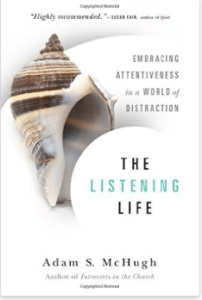
The Listening Life: Embracing Attentiveness in a World of Distractions by Adam S. McHugh
My initial approach to this book was a bit guarded: how much would this book have to Screen Shot 2016-04-25 at 6.38.36 AMoffer beyond the typical ideas? I was pleasantly surprised. McHugh is an engaging writer with many years of experience in varied ministry contexts. He has a great sense of humor too (do NOT miss reading his footnotes as they are full of quips and funny side notes!). The further I got into the book the more nuggets I was gathering along the way. Before I knew it I had a bag full of wise and practical suggestions on being a more attentive presence to God, life, self, and others. I’ll be going back to reflect on several of these insights over time. It is worth the read.
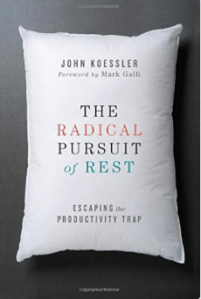




The Radical Pursuit of Rest: Escaping the Productive Trap by John Koessler
I had seen this title in the past but again was skeptical of  the typical over-spiritualization. A regular reader of this blog, David Lewis, emailed me with an encouraging review of the book. With David’s permission I submit his thoughts:Screen Shot 2016-04-25 at 6.39.24 AM

“I am about a third of the way through and loving it. I think you would, too.

Here are a couple of quotes to whet your appetite:

Rest is not an inner state that can be produced by thinking a certain way or placing ourselves in the right conditions. It is obtained only by entering into a relationship. When we find Christ, we find rest.

The Bible describes rest as both a destination and a gift…The secret to rest is not in
what we do so much as in how we see. Rest is both a location and an identity. It is a realm in which we exist. Rest is synonymous with grace…Rest is also synonymous with Christ.”

I was intrigued so bought the book myself. I read the first two chapters this past weekend and was delighted to see some solid theological musings on the subject of who rest is and not merely what I have to do to somehow obtain rest. There is great ill-health amidst the global Evangelical work ethic. This book looks like it will go a good ways to address some of those imbalances.

A Reminder to Myself
I am still tempted to approach books like these as “how to” manuals – how to make life work better, how to impress you more, how to deal with the messiness of my own life, how to…. When I do so, that which is central becomes periphery. Jesus, his life, death, resurrection, ascension and life in me is what is central. He is my life. My life is not doing better. I am sure these two authors would agree. With ourselves tethered to Christ, we can lean into helpful resources like these with proper perspective. There, now I am reminded.

I AM A BOOK LOVER! I love it when others send book ideas. Send more good reads my way anytime, please!


Posted in Resources | Tagged , , , , , , | Leave a comment

Personal Retreat

Retreating
I regularly have the honor at speaking at all sorts of gatherings. Some of those gatherings IMG_2961are retreats. Retreats are places where we go to, you know, retreat. We deliberately flee the “normal” life so that we can engage parts of God, ourselves, and, sometimes, others in a manner that so often gets pushed aside.

But you know all that.

Shepherd, Retreat Thyself
This week I am flying a short flight to a small retreat gathering. This time I will not be leading. I will be receiving. I am allowing someone else to lead me in retreat. The past 3 months have been profoundly demanding, rich, joyful, exhausting – good all around. But now I need some time to recalibrate, recenter, reorient. I need to hear from my Father for a couple of days.

Years ago, over time and error, I was taught to not head into these times of solitude or special gatherings with too strict of expectation. It’s nice when there is some major breakthrough experienced. But that is usually not the case. I have no doubt the Spirit has an agenda for me. I will wait and see what that might be. I have learned that the time away is usually less than climactic. But the quiet work God does in me has a long-range effect in my soul for months afterward. For example, my last sabbatical was 2 1/2 years ago. The ripple-effect rings from that time are still felt across the pond of my soul and in the work I offer to others.


When is Your Next Scheduled Retreat?

IMG_3062My desire is to have at least one scheduled event a year where I am not responsible for any ministry to others. It is a  designated time and place where I go and allow others to teach me, guide me, counsel me, direct me.

Be encouraged to budget for this sort of retreat – both money and time. I am encouraged to see more and more retreat places and events developing on every continent.

When is your next scheduled retreat? May the effects overflow in your own communion with God, and eventually to others.

Posted in Living Wisely, Personal Vitality, Resources, Spiritual Vitality, The Shepherd's Health | Tagged , , , , , , , , , , , , , , , | 2 Comments