What If You Struggle with Community

Community Travails
A few weeks ago, on a Saturday morning, my wife and I found ourselves with two dear, dear friends of ours over breakfast. It was the usual chatter of kids, heart stuff, life stuff, and movies we had watched. There was laughter and there were some tears. It was rich.

And it is all too inconsistent in my life.

IMG_0481

Confession: I am not happy with the present state of  my community. It’s less than it needs to be and much less than my wife and I want it to be. Make no mistake we have some very dear and close friends in the area where we live. And one of the graces of itinerant work is we have friends scattered the world over.

Yet one of the liabilities of an itinerant work is being dislocated from consistent community.  Community is hard to find even with a “normal” lifestyle.  We are square pegs in our local church community’s round-holes. We just don’t fit because of our inconsistent presence due to our travel schedule.

Maybe you can resonate. It may be due to a high turnover in your community.  Even our roles and titles can separate us. Being a shepherd – whether counselor, pastor, or care giver of any stripe – tends to set us apart at times. People think we have all the answers, live extra-ordinary lives free of struggles and failures, and sometimes think we are just plain weird. Which, in some ways, we are.

I lament community at times.

A Community Lament
I call the lack of consistent community in my life an ever present lament. I lament that we are not around enough to have regular dinners with friends or be part of a local, weekly small group.

How about you? Can you put words to any lament you may have in regard to community? Maybe you do not live as itinerant a schedule as we do, but yet find it a constant uphill chore toward deep, meaningful community. Lament is a crucial response to such a loss in life. A lament is a response of grief. Our losses must be named so they can be grieved. Lament is verbalizing a legitimate deep groan in our souls. It is not the same as complaining which has a tone of “this is not fair” to it.

Intentional, intentional, intentional. Community is hard work. For those of us who have itinerant or leader roles, we might have to work extra hard at this community thing. Do not give up. Keep pursuing. Do not sit at home hoping someone will call. Do not allow your heart to be closed off in this area of life. You must be intentional about community or it will not happen.

Shepherd’s Community Reality: A Sacrifice
An itinerant shepherd’s work requires much personal sacrifice. I have simply accepted that doing the work God has called us to give our lives to means we will likely never have “normal” community. It is one of the consequential sacrifices of our calling. I can either be bitter about it or I can embrace it and know that my Father sees and will tend to me.

How are you responding to God in this area of your life?

It would be a gift to hear some responses or ideas on this subject of community.

Posted in Living Wisely, Personal Vitality, The Shepherd's Health | Tagged , , , , , , , | 4 Comments

What If: God Does not Resolve Problems

God Does Not Always Resolve Our Problems
The person sitting before me is distraught. He has been faithfully serving in a very difficult region of the world. Time and again He has faced a medical crisis. The medical costs have been high. The emotional cost has been wearing.  What is God up to? Why will he not do something?

How Do We Respond?
We have all found ourselves in these types of situations. What do we say and not say? Those of us from the west, and increasingly globally, come from cultures that like results. We do not like unresolved tensions. We like to diagnose and prescribe and move on.

But God does not work this way. Yes, he does heal and deliver and provide. But often, maybe more times than not, he seems to do nothing.

How is the shepherd to respond? Well, there is no answer as the variables are too expansive. Yet, the Bible is not silent on the topic. Let’s ponder just one passage:

2 Corinthians 1:3-5
“Praise be to the God and Father of our Lord Jesus Christ, the Father of compassion and the God of all comfort,  who comforts us in all our troubles, so that we can comfort those in any trouble with the comfort we ourselves receive from God.  For just as we share abundantly in the sufferings of Christ, so also our comfort abounds through Christ.

Key Truths
The word translated “comfort” (sometimes translated “mercies”) is an interesting word. It is the same Greek word used to describe the “helper” (i.e. Holy Spirit) that was to be sent to us referred to in John 14-16. It means “to come alongside.” The Greek root is paraklete.

When I think of God’s help, I think of him fixing my life problems. Sometimes he does. Mostly he doesn’t. So I am missing something in my expectations. Though God does not always resolve, God is not passive. In fact, he is present. He is the come-alongside-God.

Paradoxical Parallel Realties in Life
There can be two seemingly paradoxical realities in my life at the same time. One reality is called suffering. It can come in the form of various trials, temptations, losses, and pains.

The other concurrent reality  is called “paraklete.” God’s presence.  God does not promise I will live a suffering-free existence. In fact, he assures the opposite (see John 16:33 for example). But he does promise his presence. And his presence always means redemption, his word, and his provision. Our God redeems the painful realties of life. Our God speaks truth and love to us. Our God provides for our needs.

FullSizeRender

Beauty Amidst Potential Pain. Photo © Scott E. Shaum


Mimic the Chief Shepherd

This is a cue for me in how to respond to the one with tough questions and life pains. I need not have the answers. I need not diagnose his weak faith and challenge him to read the bible more or pray more or do some other moralistic acts. I can be the presence of God to him though, and be “with him” in his pain and confusion. I can extend care in the form of compassion, lament, and hope. But I cannot and need not try to fix anything.

A Principle
Here is a principle to ponder: If God has not fixed the problem, why should I try to? Biblically we have a long theme that God uses hardships as a redemptive element in our lives. If I try to help people out of their problems, could I be working against God’s redemptive activity? Maybe. Maybe not. The key is to be slow to speak with advise and long to listen to God and wait on him.

Above all else shepherds have the privilege of being journey-mates with sheep. Offer them your presence.

Posted in Shepherding Well | Tagged , , , , , , , , | 2 Comments

Be Encouraged in Your Efforts

Shepherding of souls is a noble work.

Shepherding is Hard Work
Shepherding is a hard work, fraught with unforeseen realties. We love people and they walk away from God and us. Sheep do wander at times. We all do.We listen to people and they feel misunderstood. Human communications are easy to cross. We go and we give and we wonder if any one really notices. Your Father in heaven always sees what is done in secret. God, too, experiences these dynamics with his people.

IMG_0206

Sheep in Tuscany Italy ©Scott E. Shaum

Persevere in Doing Your Shepherd Work
Shepherding is a life-long work. In my organization we encourage a “flock” mentality. In other words, find a group of people you can love and journey with for years to come. Continually visit them, call them, check in on them, resource them, nurture and encourage them. And above all pray for them. This is a shepherd’s work. This is a persevering work. It might feel that after the novelty wears off we are weary of these people’s needs and they don’t seem appreciative of us or our efforts. However, the shepherd’s opportunity is to pursue these people over a long period of time. Transformation takes place over long periods of time in the context of lasting relationship.

Remember, The Father Sees You
So be encouraged in your shepherding work. There is no greater work we can do than invest in the lives of others. Shepherding work is copying of how God cares for us. If you feel dry or alone or unseen in your work, seek some personal time of renewal. Linger for some extended time in your Father’s presence. Enjoy him tending to you. Gaze back at him as he gazes steadily upon you. We are all sheep first, children of the Father first. Shepherding flows out of this core identity and reality.

Be encouraged. Your shepherding work is of highest value.

How has God affirmed you in your care of others? I’d love to hear of that affirmation.

Posted in Shepherding Well | Leave a comment

The Gift of Leaning-In Listening

Seeking Deep Waters
The other evening my wife and I found ourselves sitting with a friend. It was an easy conversation, not a pre-arranged appointment. After numerous misses at seeking a job, our friend had found herself with the decision between two offers. The two jobs were very different. Each would tap into aspects of her skill sets. Each had positives and negatives. Which one should she choose?

There was more here than the very real aspect of an important decision. There were deeper waters being stirred in our friend as she considered the options. Ours was the honored opportunity  to draw out the deep waters of another person’s heart.

“The purpose of a man’s heart is like deep waters
a man of understanding will draw it out.” Proverbs 20:5

Listening: The Greatest Gift
There is a difference between hearing and listening.

There is no greater service we can provide to others than pursuing their heart through the gift of listening. Each of us long to be known, seen, heard, and understood. Listening is one of the greatest, most sacrificial offerings we extend to others. How is leaning-in listening sacrificial? When we choose to listen deeply to another we set our needs and wants aside. We take the time to draw out the other person.  This type of listening must be one of our persistent pursuits as far as a competency.

IMG_6801

Listening well can lead to Open Doors

 Leaning into the Other’s Story
So often when one person shares something they experienced, their story is seldom entered into. You are likely familiar with the scenario. One person shares a story and as soon as they take a breath the next person jumps in with their story. I once heard this called “story stealing.”

Resisting the urge to tell my story on top of another person’s story takes some real self-awareness and restraint. A great gift in any sort of conversation, whether formal counseling or friendly chatting, is to lean into the other person’s story. Asking questions is the way forward on this path. We might ask for more details -“Tell me more about that.” Or we might explore deeper into the heart by asking about impact and feelings.

The simple gift of leaning into the other person and what they are sharing is a profound gift that we seldom extend to one another. For a shepherd, this is not only ground level care it is the richest of offerings.

The Gift of Listening
As my wife and I sat with our friend and plied her with questions about the decision before her, it was great joy to hear her verbalize insights and ideas. Of course, we did not have the answer for her on what she ought do. She is wise and made a good decision. What we could offer her was our presence with her as she processed. What this processing facilitates is the person coming to grasps with their own “answers.” This self-discovery is powerful. Far more effective than if I was the answer-man.

Shepherds: The skill of asking excellent questions can be learned. I often pay attention when I am reading a book in which the author raises great questions. I also take notes when I am in the presence of another one who asks the types of questions that invite deeper reflection. I always want to be learning more of this art of leaning into another’s story through asking questions that draw out the deep waters of their heart.

Listening is a self-sacrificing gift we offer to others. Who do you know who needs to be listened to today?


Posted in Shepherding Well | Tagged , , , , | 2 Comments

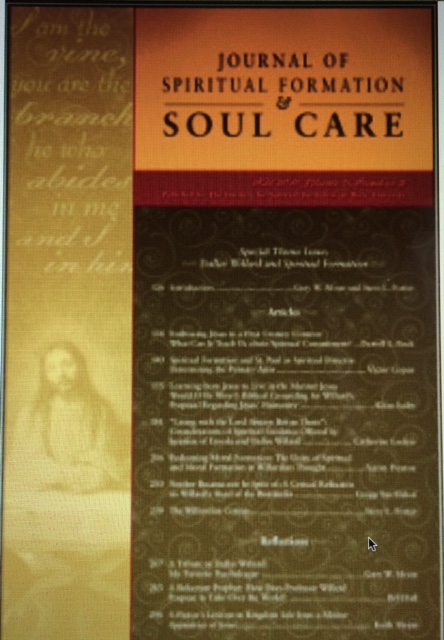
Shepherd’s Shout Out: The Journal Of Spiritual Formation and Soul Care

 FullSizeRender

 The Journal of Spiritual Formation and Soul Care is put out by Biola/Talbot. It is a peer-reviewed, twice-per-year journal with some theological weight to it. It is a bit pricey for a one year subscription ($30), but I have found it an excellent resource that has sharpened my thinking and teaching biblically and theologically on the subject at hand as well as guide me in my personal journey.

Individual volumes can be purchased. I would highly recommend Spring 2014 (Vol. 7, No. 1) and the special section on The Practice of Contemplative Prayer in an Evangelical Context. This is Biblically wonderful writing. With all the buzz on contemplative spirituality out there, these articles provide biblical grounding and guidance for contemplative practices.

Check it out at journals.biola.edu/sfj/

Do you have an excellent resource you want to share? Shout it out on a comment. Thanks for passing it along for others to see. I am always looking for good reads and resources.

Posted in Shepherding Well | 2 Comments

Who are You Becoming?

Danger! Danger!
There is a huge danger in full time ministry. Too many of us find a sense of worth and value in being needed. We like to help others. We like to be sought out for answers to life’s vexing challenges. This is all pretty heady stuff. We all know the danger in this dynamic. The risk of being sucked into this vortex is constant. Shepherd, beware.

The Greater Focus
I have clear memories of this truth becoming a personal reality in my life. I was part of a thriving ministry. Growth abounded all around us. At least numerically. But then an internal implosion happened. Under the intense pressure of “successful” ministry leaderships character was revealed and the walls caved in. It was ugly. It was painful. It was disillusioning. God taught me that competency is needed, but without character being shaped, it would not withstand the storms of life and ministry. Those were eye-opening days for me. God started by asking me, “Who do you want to be? From what do you want to minister to others – your own skill set and programs or from a well drilled deep into the Person of God?”

This is the lesson I was taught by God: We minister out of who we are.
Who we are becoming as God redeems us is far more crucial than what we get done.

The way we are matured is to soak ourselves in the Presence, Person and Word of God. There is no shortcut here. We become like the One we spend time with.

Any Naysaying?
I imagine some readers responding, “But we are supposed to deny ourselves, lay our lives down.” Yes, we are to lay our lives down for others. But what is the state of your life that you are giving to others? There are too many of us who are literally hiding behind frenetic doing for others. God invites us to face our own hearts and lives and relational tendencies. As He matures us, then deep waters emerge from which others might be refreshed. These deep waters are not a new ministry technique. They are the very Presence and Person of God in and through us. We cannot gain such influence by attending another ministry workshop. We are shaped by God as we spend what will likely feel like an uncomfortable amount of time with him.

Reflection Questions on Becoming who God has Redeemed us to Be

  • Who do you want to be in 10 years? What do you want your relationships to look like, beginning with your walk with God?  What influence do you want to provide? In short, who do you want to become and how would you like that to impact others?
  • How much time are you spending daily with God? How much are you studying the Word?  “Study” does not mean reading a short devotional, it means rolling up your sleeves and digging in. Soak yourself in the word. Please consider this: 10 minutes in a devotional book is not going to feed your soul anymore than a box of french fries as your only meal everyday will feed your body. Read on “Spiritual Anemia” here.
  • How much time are you sitting quietly and still with God daily? One of my personal dangers is to study the word, learn something, then walk into my busy day. The Word can become something I analyze and study cerebrally. The invitation is to go from study of Scripture to heart engagement with God. Allow the word to take you to your God and sit with him with whatever he has shown you. The goal is not knowledge acquisition, it is to be taught by God to walk with him in all of life. Bible knowledge without love will morph into arrogance (see 1 Corinthians 8:1). Start with sitting absolutely still and silent with God for 10 minutes everyday. Think about it, 10 minutes for nothing but sole attention on God per day. Do this for 30 days. You will want more.
  • How much time do you spend reflecting on your life weekly? Take some time each week – go to a coffee shop or sit alone on your sabbath – and ponder what you have heard, seen, and felt in life, how you have responded, what others have said to you, and where God has tended to you. Life experience is one of the key ways we grow in wisdom, if we ponder and reflect upon it.
  • How much time do you spend in solitude with God each month? Consider taking a 1/2 or full day of solitude and prayer every month.
  • What are you reading that is feeding you? Stretching you? Growing you?
  • Talk to wise people 10 or 20 years older than you and ask them what you ought to be paying attention to at this stage of your life. Listen carefully. Even if you do not like the answer, be not the fool of Proverbs and ignore their counsel. Who do you talk to monthly that serves as a mentor, counselor, spiritual director or guide? Seek God for these people and never cease looking for and pursuing them. Do not sit by hoping some wise sage will seek you out. You must seek them out and always take the initiative.
  • How much time do you play? How about being creative? Personally I enjoy fly fishing and tying my own flies. This is a creative outlet that gets me outside, allows me to engage beauty (ever held a rainbow trout in your hand?), and be creative. What do you do? Paint? Bike? Write? Cook great meals? Give yourself permission to play. Be sure you are engaged in beauty, especially if you live in a dense, urban area. These are formative practices especially as we receive them as good gifts graced upon us by a Father overflowing in love. What does this have to do with “becoming”? It keeps our hearts soft, it makes us more fully human, and it allows us to engage God in environs that are outside of ministry. Our life is more than our work.

IMG_6543

Beauty: Rainbow Trout Tail Pattern   photo by Scott E. Shaum

These are but a few practices that will have a positive accumulative effect in your life lived over decades. Much of this takes planning, focus, and discipline. That’s the way God designed it. Above all else, do not seek to accomplish any of this in your own effort. Always ask God to allow you to know his presence and love; his instruction and guidance; his provision and care. 10 years from now, you will be excited about who he is shaping you to become.

Remember: We give to others are of who we are. Who are you and who are you becoming?

Posted in Living Wisely, Personal Vitality, The Shepherd's Health | Tagged , , , , , , , | 2 Comments

Why You Need a Debriefing. Yes You.

Why, Not How
This will be about why debriefings are needed, not how to offer them. There are some great trainings on debriefing out there. Such a skill set requires more than a mere blog entry.

Debriefing gets a bit of a negative rap. Too often I hear people say they do not need a debriefing because they are doing “fine” as in they have no major “emotional problems” or  life crises to deal with.

Debriefings are not only for those who are struggling. Everyone needs to be debriefed – and regularly. Everyone. Regularly. Including yourself. 

Here are some reasons we all need regular debriefings:

The Accumulative Effect
It was a major “aha” moment when the dynamic of accumulation was introduced to me. Often we think in terms of a major life event, for example, a traumatic event like a coup or car accident, which causes us to need debriefing help. Indeed, those sorts of traumatic events do require prompt debriefing. But I have come to learn that the normal experiences of life can accumulate in our internal worlds.

Even with a slow drip, the cup eventually fills to overflowing. Stress, loss, ungrieved losses (if a loss is not named and recognized, it cannot be grieved), and other life events all pile up in our lives and internal worlds. Each such event has a definitive impact on us and that impact accumulates. A regular debriefing affords us the opportunity to prevent accumulation. And it allows us to start anew, with a fresh start for the next chapter.

If you have never had a formal, personal debriefing, then may I encourage you to begin to wade into your accumulation of life. You will be amazed at the “load” off of your soul. Life accumulates. Period. Each life event has an impact on us, whether a joyful or a sad event.

Because of this reality, we need more than one debriefing in life. We ought seek out debriefing regularly. Life continues to impact us. More on this in a bit.

The Perspective Gift
In a life that is full of change, and the cross-cultural life is immersed in constant change, we often lose perspective. Sitting across from another person who is present to listen to your story and mirror back to you what is being heard is a profound gift. This process affords the opportunity for reframing, re-catagorizing, gaining words, terms and names – in short, gaining perspective about ourselves, others, and life experiences.

Without such perspective, life can feel like walking in a fog bank. You might be familiar with this particular place, but there is “stuff” going on inside of you that is disorienting. A debriefing is the opportunity to sort through that “stuff” and gain insight from it.

The Wisdom Mine
One of the graces God has provided for us to grow into a man or woman of wisdom is life events. Of course, these life events must be filtered through the grid of his Word. Life experiences that are not reflected upon, pondered and discussed with wise counselors, however, are a profound loss of potential wisdom. We learn from life. When we go from one life event to another week after week, month after month, year after year without reflection- well, we have missed out on a gold mine of life lessons that could grow us in wisdom. The book of Proverbs has one word for the person who does not take time to reflect upon life lessons: fool. A debriefing allows us to reflect upon what we have done, experienced, and better understand the impact it has had on us and what we can learn from it to guide us in future decisions and similar experiences.

Kids Need Debriefing Too
Be not fooled here. Kids need to tell their stories too. We often say kids are like sponges. Indeed. They are absorbing far more that we realize. Even the youngest of children who can share their story benefit from child-debriefing specialists. If you won’t go to a program for yourself, sign the family up for the kids’ sake. One of the end gifts is a common language for a family to process stress, change, and transition together.

We All Need Debriefing
My wife and I are debriefers. We have come to see the wisdom of debriefing. We have been gifted with hearing hundreds and hundreds of cross-cultural workers’ stories which has not only informed our own work but been used by God to shape our own hearts. We are so convinced of the need for regular debriefing that we seek to be debriefed ourselves after any major event – whether a series of meetings, a ministry event, an international trip, or a life transition (e.g. We have a son graduating from college. We will talk that one over for sure because it does impact us). Sometimes we debrief ourselves. Many times we need someone to help us unpack with good questions so we can hear what they are hearing. This simple choice helps us avoid life accumulation, allows us to keep perspective, and gifts us in growing in wisdom.

Shepherd: If you have never been debriefed, please stop, drop and roll on into a program someplace. Immediately. Seriously, gift yourself in allowing another shepherd to guide you through a personal debriefing. Also, debriefing is a skill set all shepherds can have in their repertoire. Check out MTI’s CODAR program as but one example of a great training.  Be forewarned, CODAR fills up in weeks. Sign up for next year and you might get in.

Be a debriefing evangelist. Encourage workers to seek a debriefing everywhere you go. It is like an annual physical – it is preventative medicine to keep us healthy. Let’s do whatever we can to aid workers to remain on the field doing their crucial work for the King.

Posted in Living Wisely, Personal Vitality, Resources, The Shepherd's Health, Thinking Well | Tagged , , , , , , , , , , | 7 Comments

The Shepherd’s Pursuant Handiwork

San Antimo, Montulcino, ItalySan Antimo, Montalcino, Italy

God is our Model
Shepherds pursue the sheep. God is our ultimate role model in this simple yet crucial act. He is the pursuer of our souls. It is the nature of God to seek out and give of himself. And as bearers of his name, it is the character he instills in his people as well. This is especially true for shepherds.

Sticking with Your Flock
A few weeks ago the topic of identifying one’s flock was addressed (you can read it here). As a shepherd identifies her or his flock – that particular group or groups of people they will deliberately tend to –  the shepherd can then set out with an intent of deliberate care. Where we shepherds get into trouble is when we are not intentional about flock identification. In such cases it is too easy for the world to become our flock and every need we see is to be tended to. It doesn’t take any time at all before we are overextended.

By committing to a specific group of people within the shepherd’s capacity, the shepherd is able to respond to needs as they arise. Even more than being merely reactionary, we can be intentional. We can initiate check in’s – those simple yet profoundly caring calls or visits to “see how you are doing.” We all like being pursued. It causes us to feel seen, known, and cared for. The gift of shepherding is journeying with others over a long period of time. Shepherds are journey-mates.

Get to Know Your Sheep
Only over an extended time can we get to know the individual sheep well and their tendencies and needs. We can spend time with each sheep designing a thought out course of self- care and growth. You can read about the ultimate purpose of spiritual formation in another previous entry (you can read that here).

So here is a course of action for each shepherd. Identify your flock. Maybe your flock has been identified for you. Then pursue them. Be the one to make the call. Shepherds do not passively wait until there is a crisis. As you get to know each sheep, ponder and pray with them how they can be well cared for and grow in maturity and vibrancy. Each sheep’s need is different. Ask them what they want and need. And be prepared to offer guidance as they simply may not know. The shepherd also gains experience of discerning ill health or the need for a greener pasture. From this experience we can offer wise course of actions – like a specific spiritual practice or some sort of training that could help the sheep on the next leg of the journey.

There is plenty there to keep any shepherd fulfilled with a loved flock of sheep.

What if I am Overextended?
What if I am overextended you might ask? Well, this calls for hard decisions. As caregivers, shepherds do not like to say “no” to a need. But that is not a good emulation of our Lord. Jesus literally passed by needs. He was not need-driven. He tended to many needs, but not all needs. If our flock is too big, then in a conversational and relational manner some of the sheep must either be let go into the caring hands of God or more ideally, into the hands of another shepherd. The key here is to remain well within one’s capacity. That way when a crisis does arise, and they will, the shepherd has the margin to respond.

Decisions to say “no” to needs or to let some ministry go are hard and must be made with much prayer and counsel. But be encouraged to think long term. And be determined to live your life as a model and example for others. If a shepherd calls sheep to live well and wisely, the shepherd must do so first.

Shepherds Can Be Pursuant of a Wise Life and Ministry Model as They Pursue Sheep
Pursuit is a key element of a shepherd. Pursue a well thought-out life and ministry model. Pursue identifying your flock. Pursue each of those individual sheep and pursue with them a  course of care and growth. As this is done, you will be deeply encouraged over time with the life-change you not only see in others’ lives but yours as well. Do not be discouraged as this is a life-long learning process and we usually learn from mistakes. Shepherd others, evaluate, make changes, carry on. God is with us each step of the way teaching us.

I’d love to hear some thoughts and questions on the topic. Above all else, know you are pursued by your God.

Posted in Living Wisely, Shepherding Well, Thinking Well | Tagged , , , , , , , , , , , | Leave a comment