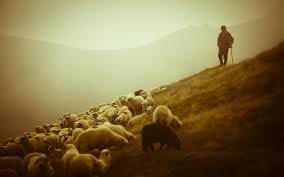
How Personal Risk Deeply Reflects God’s Nature

IMG_8372 ©Scott E. Shaum April 2015

Was it worth it? In 2005 I had been in remote Cambodia providing some much needed pastoral care and counsel to a multi-national church planting team. The small city where they were working clung to the banks of the Mekong River not too far from the Viet Nam border.  While there, I contracted Hemorrhagic Dengue Fever, which is a mosquito born virus similar to malaria. Two years later I was back in Cambodia. On the way home I began to manifest some strong flu-like symptoms. Within 5 days of being home I was in the hospital. In the ER I had some sort of episode that was similar to cardiac arrest, but that is not what happened. It would take a year of tests and medical specialists and finally Mayo Clinic before I had any kind of “answers”. There I learned what likely happened is that I had contracted some unknown Asian virus that had “made the leap” into my nervous system. This virus, following so soon after Dengue, compromised my auto-immune system. I now manifest symptoms that land me within the Chronic Fatigue Syndrome spectrum. I will likely live with this for the rest of my life.

Is it unwise to take such risks? Is it foolish for medical workers to travel to West Africa to provide needed care in the Ebola crisis? Is it too risky to go against common warnings and locate oneself along the Turkey/Syria/Iraq border to care for the flood of traumatized refugees while ISIS bears down? Is it too high a cost to reach across socioeconomic  and racial lines in one’s community to demonstrate love? It is true each of these are costly and risky. But cost and risk is not to be our primary concern. If it is, we will be more concerned with our own well-being than that of others. And that self-concern is most unlike our God.

When we take risks that place us in possible harm’s way for the benefits of others, we are mimicking one of the core characteristics of God’s nature. You see, our God is Father. He desires sons and daughters to pour his life and love into. So much so that he has sought us out at great personal cost. The Son of God on the cross is the greatest display of God’s glory, because it shows the self-sacrificing, self-giving nature of his love. And he desires other sons and daughters who so acutely know his love, that they willingly mimic him. That is how the glory of God’s love is displayed – He pours into us at personal cost and we are given the privileged opportunity to draw others into this relationship too. And sometimes that comes at great personal cost.  Yes, we must seek counsel and be prudent in our choices. But the priority question is not ‘ought I risk’. The greater question is, ‘what opportunities has God placed before me to carry his love to those who need it the greatest’. To live in a self-giving, self-sacrificing manner for others’ benefit is to be most like our Father in heaven. Sure there may be fear and turmoil. That is normative. Even Jesus experienced this in the hours before the cross (see John 12:27-33  and Mark 14:32-36). Each act of risk for another is a deliberate act of love. And, yes, it is worth it.

Posted in Shepherding Well | 2 Comments

Ways to Wield Influence without Positional Authority

Authority has gotten a bad rap for many decades now. One reason is that those in places of authority have abused that stewardship. Thus trust is pretty low amongst society regarding people in positions of authority.  But authority is not inherently evil or bad. After all, our good God wields the ultimate authority. He uses his authority to influence our lives towards love and life. Shepherds need not have positional authority to influence others. In fact, it might be best to not utilize any authority in areas of influence even if one does have that positional authority. Yet, God invites us to use spiritual authority – that is his presence and power in our lives – t0 influence others. See the previous entry for more on this point.

So how can we influence others in healthy ways without having or utilizing positional authority? By the way, T. J. Addington posted a great write up on this subject recently – see his post How to influence others without telling them what to do or how to do it.

Motive: Their Good not Yours
Let’s begin with motive. Our motive of influence has to be for the other’s gain, not mine.

Yes, people come to us with pain, darkness, conflict, confusion, sin, and all the rest of their humanity. Shepherds have the privilege to lean into this messiness and tend to the one before us. This type of influence is personal and individualized. This sort of care is so lacking in the world today.

If I find myself getting impatient or pulling back rather than leaning in, that usually has more to do with my heart than the other person. The desired motive is to care for others even if that comes at a personal cost. And often that cost will be far more time than expected, lots of emotional energy, and no guarantee the ending will be a happy one. Where is your shepherd’s heart on influencing others? The shepherd is invited to lay their life down for others. One way we deny ourselves is to lean into other people’s messy  lives, even if that takes inordinate amounts of time and energy.

One more thought on motive. It would be easy to take away from the previous paragraphs that we need to muster up the will to deny ourselves and care for others at personal cost. Nothing could be further from the truth. We do not self-generate that sort of love. God gives us that kind of love. He teaches us and shapes us and loves through us. The more we are experiencing the love of God to us as his adopted ones the more than love will overflow. Be loved by God, allow that love to overflow. That is the proper order.

Influencing Skill: Listening
There is no need for me to write much here. There are many great books out there on the subject. Like Proverbs, for example.  Let me remind us of a simple truth.

A shepherd’s great opportunity is to know the other’s story. Who are they? How are they experiencing and being impacted by life? How are they experiencing and responding to God? What is God inviting them too? How can I encourage and assist them? We extend lots of questions and few words of advice. Listen. Then listen some more. In many cases, that will be enough. People just need to tell their story; to be heard and know at some level. The burden will be dissipated and they might just think you are a miracle worker too.

Influencing Skill: Journey with, Do not Fix
The principle here is simple: No fixing allowed. Period.

2 Corithians 1 gives a wonderful principle. The God of all comforts comforts us not by removing the various trials we suffer with, but rather promising his coming-alongside-presence. That is the meaning of the Greek in verses 3-7. And that is our model. If God has not fixed their problem, what makes me think I should? My greatest opportunity toward influence is to journey alongside people in their life-struggles. Being a journey-mate is a great honor. Shepherd’s walk along with the ailing sheep. Sometimes they pick them up and carry them for a ways.

In the End, Influence is about Relationship, not Positional Authority
There is much more than can be written on the subject of influence. You get the picture. Influence, the greatest life-changing influence, comes in the context of relational, heart-enagegment. No positional title and authority needed. Just a heart willing to tend to another one. That heart is granted by God to us. As shepherds love, the sheep’s trust will rise, hearts will open, and God will do his redemptive work. It is not a formula, but it is a redemptive way to influence.

Thus, if you do not have a fancy title of some sort, lack top-level doctoral degrees, and have not written any books lately, fret not. Your greatest influence is the presence and person of God in and through you. Allow him to extend himself through you. You will see life transformation happen before your very eyes.

What ways have you been significantly influenced by others? Do you have a short story to share?

Posted in Uncategorized | Leave a comment

Having Influence without Positional Authority

One of the challenges in the act of providing shepherd care is influencing change without wielding great or any organizational, positional line-authority. Many times I am in a situation where there are clearly systemic or personnel dynamics at play that ought to be addressed clearly and sooner rather than later. But I have no organizational authority or place to make such changes. What does one do? Can any influence for change and health be administered? If so, how does one do that?

It is a fallacy to think the only way we can influence is through organizational or positional authority. That might be one of the more “easy” or efficient ways to influence, however that does not mean it is either the wisest or healthiest way to bring influence. People respond to other forms of influence more readily than that which is “top-down.” The organization I am in services over 150 other organizations annually. In none of these scenarios are any of our staff in any position of line-authority. Yet, we can have wonderful, life-giving influence.

What are some of the ways shepherd care givers can influence well without using an organizational trump card?

Knowledge and Competency
One can be called into a situation based on a certain skill set or knowledge base. A simple illustration could be team conflict. When a team is deeply struggling with a break down in trust over relational hurts to the point that they are at an impasse, someone with skills in guiding a group of people toward resolution and trust-rebuilding can be brought in to provide that sort of professional care. In this instance, the influence one has is a skill set or knowledge base that is brought to bear on a situation. What makes way for the influence is another’s need. When shepherds scratch where people itch, the people are eager to respond. Thus influence toward life and health can be wielded well in a non-manipulative and servicing manner.  There are multitudes of skills in the shepherding arena such as debriefing, crisis response, family/TCK/MK skills, team building, leadership coaching, spiritual directing, etc. It behooves us as shepherd care providers to master, as much as humanly appropriate, a handful of professional competencies that we can provide others. This is a tremendous means of service and influence that need not have line-authority. This area of knowledge and competency is likely the easiest to draw upon because it is the easiest to acquire and manage.

Anyone with a certain level of determination and resources can read books, attend trainings, and work hard at mastering skills and knowledge. But this level of influence only goes so far. The next means of influence is even more significant, yet more demanding to grow in.

Spiritual, or Personal Authority
Who have you been with lately that impressed you as a person of substance? There is something about this person that carries a “weight” or “depth”. We speak of such persons as having character, spiritual depth, and a presence that alone bears impact. This sort of influence is the most significant, the most demanding to attain, and the one we all ought to strive for, again, in the human sense of the word.

Let’s reflect on authority for a moment. What is authority? When a police office commands a fleeing person to “stop in the name of the law”, what dynamic is at play here? The police officer has no authority in and of themselves. They are merely another member of society. But they have delegated authority from a governmental branch that grants them a level of authority. And the police officer is appropriately leveraging and implementing that influence in such a situation. The key principle here is that the authority is granted by one entity to another person. This is delegated authority.

With that image in mind, let’s consider spiritual authority. What is spiritual authority? First,  it is not something we conger up ourselves. We receive authority from God. He grants authority.  Authority is his alone to delegate as he deems wisest and best. Second, it is not meant to serve ourselves but others – particularly God’s purposes. Authority of any type – positional, title, line-authority or especially spiritual authority is never to be used for one’s own gain. It is granted as a platform from which to serve and enrich others. That is where corporate, social, political, educational, and church authority gets off base – when such positions are used for personal gain rather than community benefit. Third, authority is influence.  As a shepherd, my greatest means of influence is my own personal self  – my walk with God and how that is manifested in relationship. Let me state that again: my greatest influence is not a title, or a degree, or a skill set, or knowledge, it is who I am. Or said better; it is who God is in and through this frail vessel. The authority is his – his Person and his Presence in my life.

Spiritual authority is the manifestation of the Person and Presence of God in my life, regardless of any organizational line-authority or public recognition. And that type of authority is bestowed by God upon whom he will, when he will, and always comes about in the context of communion. It cannot be coerced or manipulated from God. It is not a commodity to be gathered and stored up, yet one can grow in it. Authority is a corollary, it is not what is to be sought. It is an overflow of relationship. What is to be sought is intimacy with God and that is always initiated by God. I am always the responder. He invites me into deeper communion with him. As I respond to him, as I spend time with him, I become like him. I grow into reflecting him in every situation in life. How that comes across is the “weight” and “depth” mentioned earlier. Respond to God in communion and he will grant “influence” as he sees best. Seek God, not authority. Do not worry about how others are impressed or impacted by you, be concerned with abiding in Christ. The rest will come as God deems best. In fact, we might not even discern what he is up to in the moment as we humble ourselves to simply walk as his servant towards others.

As a shepherd we need not demand on organizational or positional authority. In fact,  those titles attached to ourselves can undermine the very influence we really want to have. We need not have lots of fancy powerpoints and degrees to flash around. What we have before us is the opportunity to wield tremendous influence for redemptive purposes merely by walking well with God and bringing his Presence and Person into every situation we find ourselves in.

Growing in Influence
We must be reminded that we cannot manipulate this dynamic. It’s not like we plug into a power source or go to a filling station and then go out on our own to do with the power source as we please. No, this is all about relationship. God is ever inviting us to commune with him, learn of him, be immersed in his word, spend leisurely time with him and allow him to have his influence on our lives. This is a life-long process. The desire is that the older we get, the more mature in Christ we become reflected in wisdom, joy, truth, and love in all we do. Humanly speaking this means we take seriously our need to grow in self-knowledge, relational maturity, knowledge of the Word, spiritual practices, and professional mastery. Yes, there is much we can “do” to grow in our influence through our person. However, we must keep first things first – the source is always in our intimate communion with God. As we abide in Christ, he pours his life into us. For without him we can do nothing. With him, he can, through us, wield tremendous influence for life, peace, and truth.

Reflection: How is God inviting you to grow in your communion with him? How are you responding? What type of a person would you desire to be in 5, 10 or 20 years? Let that be the motivation for your decisions today. How is God drawing you to follow him down that path of maturation? How are you stewarding influence you have been granted in your family, friendships, job, and community? Is there anything you need to repent of? Spend some time reflecting on this significant topic, it is the opportunity each of us have to bring God’s influence to bear in all of our life.

Next week we will look at this subject from the point of bringing spiritual or personal “authority” to bear in any given situation. And as always, I’d love to hear from you on how you have experienced this dynamic of personal over positional influence.

Posted in Living Wisely, Shepherding Well, Thinking Well | Tagged , , , , , , , , , , , | 3 Comments

Who is Your Flock?

Shepherding is core to member care. One of the better metaphors I have heard of late is that of the “member care tree”. This tree has shepherding as its roots, the main trunk is “member care” with the main branches being general member care, clinical care and pastoral care (yes, shepherd care is not the same as pastoral care – more on that another time). The key point is that all care is rooted in a shepherd framework. In all of our care, we shepherd people to God. See my early entry on the ultimate goal of spiritual formation, which is a goal of member care as well.

Following the shepherding imagery we can speak of flocks. Why think in terms of flocks? My conviction is that effective life-change comes over a long period of time in the course of everyday  life. A person who has a long-term presence in other’s lives can bring the greatest influence.  Thinking in terms of “flocks” as groups of people you want to encourage and equip over a long period of life can have profound and exponential impact.

Each shepherd has a flock, or maybe several small flocks. Who is your flock? Who is that group of people you tend to regularly and over a long period of time? Your flock may be a group of people within your organization. Or it might be people outside your organization. For myself, they are both. I am on the leadership team of my organization so the staff of my organization is one of my flocks. I have great joy in tending to my fellow colleagues within my organization. My wife and I also service workers internationally. Those select groups of people are our flocks as well. We maintain contact with them, journey with them, tend to them, care for them. That is what shepherds do – care for their flock.

Unknown So who is you flock?

Identifying a Flock
Your flock ought to be a group of people with whom you have good chemistry, those you love to love. They also must be a group of people you are willing to be pursuant of over a long period of time. Journeying through life is key to shepherding. Shepherds take the initiative. They pursue and gather the flock. They watch over, listen to, and get to know the flock well. John 10 gives us wonderful imagery to emulate.

Shepherds get themselves into trouble in two ways, both of which do not bode well for flocks. First, shepherds are to lead their sheep to pasture – that is to Christ. Shepherds bring Jesus to people and people to Jesus. We are not all they need. Shepherds get into trouble when they lead sheep to be dependent on them. We are to lead people to greater dependency on God. A second way shepherds get into trouble is when they say yes to too many needs. Good shepherding is not marked by frenetic running from flock to flock to flock. Excellent shepherding is marked by presence and attentiveness. Better to have a smaller flock than have too large or too many flocks. Ask the Father which of his he wants you to tend to and stay within that limitation. This is a protection for you and the sheep.

So, who is your flock? Any other lessons you have gained from your shepherding of people over long periods of time? I’d love to hear from you on this subject.

Posted in Shepherding Well, The Shepherd's Health | Tagged , , , | Leave a comment

Why Sabbath is to be Taken Seriously for Vocational Holiness

Sabbath, like our entire walk with God, is an act of faith. By faith, we cease and desist from work for one day. The word shabbat does not mean rest, it means cease. And sabbath is absolutely essential for vocational holiness.

IMG_0785

This entry, of course, is not going to cover all the realities and dynamics of sabbath. There are  books out there that do a wonderful job at that. This is a subject that will be addressed from numerous angles over time. Here are some initial reflection for the necessity of sabbath.

From Eugene Peterson we gained the concept of “vocational holiness” (see his book Under the Unpredictable Plant). Gordon T. Smith in his excellent book “Called to Be Saints” says this about sabbath and Peterson’s concept of vocational holiness:

“We must stress that sabbath observance is crucial to vocational integrity and holiness. This is one of the central commandments of the Judeo-Christian heritage; the witness of Scripture suggests that rest is part of the rhythm of God’s creation and thus of God’s work. And as we participate in the work of God, it makes sense that we learn to disengage and intentionally  practice, one day in seven, rest….We sabbath because sabbath speaks of our hope, our deep confidence that one day all will be well. Sabbath is an act of defiance against evil and a deep act of trust in God to do what he will most assuredly do. Indeed, through Sabbath we signal that the future well being of the world rests ultimately not on the strength of our arms, or our capacities, or our intelligence, but on God’s gracious purposes and his power to fulfill….Sabbath means we trust God; it is an act of faith (pp. 124 and 168).

It amazes me how we soon forget that sabbath is indeed a command. It is not a suggestion. More than that, even before the Mosaic law, sabbath was established and blessed within the created order. And like all of his graces and directives, it is a gift that leads us toward life (remember, Life if a Person – John 14:6; 17:3). There is nothing biblical about a 40-60 hour work week. Yet that is a constant measuring device. What we are given Scripturally is the decree of 6 and 1. Work 6 days. Cease 1 day. And by cease, we do not mean dabble. We are not meant to dabble in our rest any more than we are to dabble in our work. We are instructed and modeled by God to rest. Cease and desist. Turn off the email. Turn of the internet and the cell phone. Do not be accessible to the whole world. If that rubs in you as being irresponsible, then there might be something of a misplaced personal identity to wrestle with. Let’s say you died tomorrow – car accident or something. Would the organization you are part of come to a grinding halt? Would all God is doing in your midst evaporate? It is humbling to realize that we are not absolutely indispensable. We are invited into God’s created and redemptive work, but that work is not dependent on our frenetic involvement.

Let’s look at this more proactively. Part of vocational holiness is how we live all of our lives. We work, and we work hard and sacrificially. Then one day a week, by faith, we delight ourselves in God (see Isaiah 58:13-14) by ceasing from work. We celebrate his loving kindness and faithfulness in our lives. We rest. We play. We eat and drink with family and friend. We enjoy his and one another’s company. To partake of these is also an essential part of our vocation. This day informs all our other days. It reminds us that we live and work under his reign and goodness.

Did you catch that? Rest is an essential part of our vocation. Without sabbath, our lives get out of focus.

Sabbath is yet another invitation from our Father inviting us through the Spirit and Word to commune with him in Christ. Are we aware of that invitation? How are we responding to that invitation?

Let’s ponder some ways to take steps deeper into the practice of sabbath.

Some practical reflections and ideas:

  • How can you disengage in such a manner that you simply are not accessible to those
    other than certain friends or family? What would the act of putting away the cell phone and email for one day in seven do for your heart, mind, soul and relationships?
  • May I suggest no buying of goods too? Rest from being a consumer.
  • What would be practices that would allow your soul to be recharged, enlivened and
    renewed for one entire day?
  • How would ceasing from these actions enable you to grow in your attentiveness toward God and others and your work the remainder of the week?
  • Prepare meals ahead of time so there is not lots of kitchen work or clean up. Let mom take a day off too. Of course, Beth and I like to cook, it is something we do together. So sometimes you will find us in the kitchen making a special meal and then enjoying that together.
  • No legalism allowed. Make it a fun day. When we had little boys rampaging around the house we turned off all electrical goods and lit candles. Well to boys that can be a drag. So we gave them little flashlights. Now that was cool. We did stuff together – like a game or talk or read – then they headed off to their rooms with flashlights to play legos or whatever. The key is that they knew this was a day different than other days, that our God is good and alive and loving and we are responding to him by seeking to walk close to him. Be creative and have fun together with family and friends. Mark this day with joy.

Take some time to ponder how to live out a sabbath lifestyle well. How can you carry sabbath rest (that which the author of Hebrews invites us into) through a busy, demanding, active week? If you are practicing sabbath, are you sensing a delight in God and a rest or not? Are you being graced to carry that delight and rest into your busy week ahead? Ask him to lead you in the way of sabbath. He will gladly do so.

Shepherds: This is rather a no-brainer, but one of our primary opportunities and responsibilities is to model. There is a Christ-like, mature way in which to live out our vocation (all of life, not just our job). Fulfilling our calling as  shepherds of souls requires we live into the sabbath reality and practice that we may ever grow in communion with God. And again, this is a topic we can lean into in conversation with others, eager to offer helps and counsel as requested.

Resources:
Lynn Babb Sabbath Keeping. There are lots of solid books on sabbath. This is one of my favorites for its practical suggestions and advice.


Posted in Living Wisely, Personal Vitality, The Shepherd's Health | Tagged , , , , , , , , , , | 2 Comments

Cultivating Faith, Diminishing Fear

DSC05155

There is much in this world that can arouse fear: political crisis, health concerns, relational conflict, financial stressors, on and on. Yes, there is much in this world that would engender fear in us. Fear is a normal response to such life dynamics. And when we find we are emotionally thin or depleted from life demands, the propensity toward fear, anxiety and worry is only increased.

A fear inducer for me is my health. Years ago I contracted a virus that apparently got into my nervous system and messed with my autoimmune system. I now live with the daily symptoms of Chronic Fatigue Syndrome. There are times when the symptoms become quite strong and fear an almost automatic response. These moments are also an opportunity to exercise faith expressed in simple trust in my God’s goodness, presence and care.

Faith is a hallmark of mature spirituality. Faith is a cultivated posture of one trusting in the goodness, presence and care of God – here and now, amidst whatever life is throwing one’s way. A person who is mature and maturing in Christ, is growing in faith despite circumstances.

We make a choice to cultivate faith. This does not merely come about by sheer willpower and effort. Rather it is born of intimacy with Christ. As we get to know Jesus better and better, we come to know who our God truly is. Our God is our Father, and we are his children. He watches over us, cares for us, provides for us. The entirety of our life is in his good and powerful keeping. We can take seriously Jesus’ admonition to not worry about our lives (Matthew 6:25). Thus, as we abide in Christ, we can grow in faith.

But there is choice in the everyday circumstances as well. I can choose to trust or I can chose to give myself over to worry. I can allow anxiety to take seed and flourish in my heart and mind. When hard times come, I can either lean into God trusting his goodness, or I can give myself over to the whims of my mind and the temptations to try to rule my own world with frenetic, anxious self-managment.

As many of us know, fear can be a horrid master. It paralyzes us from making wise choices. It can cloud our perspectives. It can even sway important decisions. Turning our mind’s attention from that which concerns us, toward God, is an essential act of faith. Sometimes we are stuck and need the help of another person to walk us through an anxious time. Seeking a journey mate can be a wise act of leaning into faith rather than fear.

Faith is a mark of a mature believer. Cultivating faith allows us to be free to live out what God has put in us to do with our lives, despite uncertainties and adversities.

Some of us may need to take a quick assessment. There may be dynamics in our lives that are breeding fear in us of which we are not fully aware. What causes fear, anxiety or worry to surface within you? What are fears that you have not put words to?  Here is an exercise you can practice: Sometime over the next week, maybe on your Sabbath (cause I know you are all taking Sabbath serioulsy!), take whatever fears and worries you are having, get alone with God for a chunk of time, and talk through those concerns with him. Then quiet yourself and allow yourself to be tended to by God. Turn your thoughts from your fears -toward God. In other words, instead of contemplating what worries you, contemplate God. Turn your gaze to the One who is always gazing upon you. Do this regularly, even daily as needed. Allow God to strengthen your faith by showing you his care and then step courageously back into your life, walking in faith.

It would be an illusion to assume we can eradicate fear from our lives. As I mentioned, fear is a normal human response to life. We might experience victory in one area of life only to have God show us another layer or different circumstance he invites us to trust him with.  All of life is an invitation to learn to trust him more deeply.

Shepherds: How is your faith cultivation? How are you journeying toward God with whatever prompts fear, anxiety or worry in you? When you are with others, if you sense fear is a factor in their lives, ask them about that dynamic. Be gentle in your reception of any confessions of anxiety. Lead them to the One who is Peace and gives peace. Help others to grow in their faith by offering helpful exercises or practices that help them to commune with Christ. Pray for them and follow up with them regularly.

What has helped you in your growth of faith over fear? What helpful practices have you offered to others? I’d love to hear from you. And please pass this onto anyone you think might find it helpful. Thank you.

Posted in Living Wisely, Personal Vitality | Tagged , , , , , | Leave a comment

What is the Primary Aim of Spiritual Formation?

Unknown

Spiritual formation is the buzzword these days. And I am all for it. Yet, when I speak with others I hear all sorts of descriptors of what formation is to be about. Let’s ponder this for a moment.

In short, spiritual formation is the growth into our union with Christ. The Father’s deep desire is that we walk in our core identity as his child. This reality is experienced in our daily, dynamic engagement in the life of Christ. To put this in a negative way using popular terminology, the aim of spiritual formation is not better spiritual practices or even character development. Those are indeed desired realities in our life, but those are not meant to be the primary focus of spiritual formation. Why is that so?

Different New Testament authors use different lingo to describe this dynamic of our relationship with Jesus. Paul writes of the “in Christ” life. John uses the word “abide” in Christ. The author of Hebrews uses a really different phrase of “entering into our rest.” A spiritually mature person is ever growing in their capacity to commune with Christ by the Spirit.  And that is the aim of spiritual formation. Character development, or being more like Christ, is a corollary or derivative of that relationship. As we commune with Christ, we become like him. As we become more like him, our capacity is increased to commune deeper with him. If we focus on character development then the danger is to pour our energies into our own transformation and that leads to a moralistic spirituality that is all too popular in today’s Christian world. Moralism is our effort to live to some perceived standard. Too often what I am reading today on the subject of spiritual formation is that I am to practice spiritual disciplines asking God to strengthen me or help me. God is not our assistant to help us shape our own lives by our efforts.

So here is a litmus test when reading or listening to teaching: to where is your gaze being drawn? Does the teaching cause you to become more introspective, drawing your gaze in upon yourself? Do you find your thoughts wrestling over what’s wrong with you and what do you need to do to make it right? That will always lead us to a frustrating effort in personal morality. This is not the Christ life. Or, is your gaze lifted up and toward God? Are you encouraged to contemplate Jesus, his model to you, and his teaching in the Word? Do you find yourself leaning more into deeper dependency on the Spirit to work in your heart? This is where we want to be drawn – to ever increasing dependency with our gaze fixed upon Jesus and not on ourselves.

Yes, there is place for human agency. We are to examine ourselves, confess sins, and make wise, godly choices.  And spiritual practices are ways and means of facilitating our communion with God. But the key here is the starting point. God is always the initiator. Our metamorphosis is always his work in our life. We are not self-developed, self-initiated, or self-matured. We are always responding to the invitations and works of God. When I engage in a spiritual practice, for example solitude and as we meditate on Scripture, it is to allow God to use that time and space to draw us to himself. As we carry that communion into our active lives, he is always active, present and shaping us. We incrementally become more like Jesus. That transformation is overflow of communion with God.

In summary, spiritual formation is about union with Christ. Abiding in Christ is the Father’s supreme desire. A spiritually mature person is not becoming more independent of God but growing in dependency on God.

Caregivers: As we engage people we can lean into this subject regularly. Having a question on hand such as, “how are you communing with Jesus in recent months” is essential. As shepherds, we guide sheep toward pasture and our pasture is always the Person of Christ. And we can be quick to offer helps on how people can learn to grow in abiding with Christ. All of our life is to be an overflow of his life in and through us. Most cross-cultural workers can use some mentoring and coaching on how to grow deeper in their constant, dynamic communion with Jesus and entering more deeply into the Life of God by the Spirit. Everyone is on a life long process of personal maturation. A shepherd’s primary responsibility is to not aid people in managing their life better. We are to aid people in growing in their walk with Jesus. The Apostle John makes it crystal clear that we are being invited into the life of the Father by the Son through the Spirit. This is what the world is longing to see – ordinary people living mundane lives in ever growing communion with the True and Living God.

Resources:
Gordon T. Smith’s book Called to Be Saints is a crucial read on this subject. It is not a light fluffy read, but not theologically overbearing either. It will give you plenty to ponder in your own walk with God and your care of others.

Posted in Shepherding Well, Spiritual Vitality | Tagged , , , , , | 1 Comment

Five Themes Facilitating Ill Health and Ineffectiveness Amongst Global Workers: Theme #5 Lack of Permission for Self-Development and Self-care

DSCF2561

I am writing from GMCN in Antalya, Turkey. I would be most encouraged if you find any of this helpful to pass it along to colleagues. Equally, I’d love feedback, whether a differing viewpoint or another thought or idea that is spurred in you. Thank you.

This is the fifth in a series of five themes on dynamics that facilitate ill health and ineffectiveness amongst global workers. Here is the original list and links to read the previous entries:

1. Spiritual Anemia (read hear)
2. Holistic Exhaustion (read here)
3. Relationships in Crisis (read here)
4. Identity attached to role and performance (read here)
5. Lack of permission for self-development and self-care

I ended theme #1 on spiritual anemia with the following paragraph:

“The bottom line is this: living cross-culturally requires a higher level of spiritual intake (and other forms of self-care I will mention in the next post) than living in our own culture. Anemia is deadly. What people in the world need to experience is not a well-oiled team or a slick program. Anyone can do that. What they need is the Risen Jesus Christ. Either he is overflowing from your own topped-off well or not. Not much latitude there. We need much more time in the Word, in solitude and prayer, in personal reflection, in rest, in reading books that stimulate us, in seeking counsel from others and a lot less time numbing ourselves on the web or other entertainments or pure, frenetic busyness. Nothing wrong with those realities in and of themselves within reason. (And strictly speaking, if you are living in a world of anemia, you will have a very limited ability to judge where the line of reason falls). But they will not nourish our souls to the point that we will thrive.   Let me state it again – we need a lot more time nourishing ourselves spiritually. Do you feel guilty or afraid even thinking about what that might mean? Then you are going to have to wrestle with God over that reality.”

Many of us do indeed feel guilty about tending to ourselves. There can be various causes for this. Many do not know what to do or how to do it. Some have their identities so intertwined with performance that there is no allotted time for “non-performance” activities – like rest, relationship and spiritual care (see theme 4 for more on this dynamic).  Some are still seeking to justify their existence in their location to financial backers, leaders, teammates and even themselves. So we keep pushing hard. Saying ‘no’ seldom seems to be an option.

Yet, the concept of on-going growth, self-development and care, is a biblical one. For example, Paul encouraged two of his younger proteges, Timothy and Titus, toward this concept. The simple fact is, our walk with God is fundamentally a relationship. And all relationships take time and energy, focus and intention. Any relationship that is neglected will wither, like a plant that has not been watered, tended to.  We are invited to follow God to where he is inviting us. We have the opportunity everyday to respond to God’s ceaseless invitation to commune with him, learn of him, follow him, and lay our lives down by his bidding. These responses to God are wise ones that allow for our on-going formation.

Let’s look at both of the invitations to self-development and self-care.

Self-development
Each of us have God-given skills, gifts, and personalities. Each one of these areas can be honed to a sharpness that allows ultimate kingdom contribution. Every role we have in our lives requires ongoing development: relationships, parenting, friendship, walking with God, professional skills and spiritual gifts. Each one is an opportunity for growth. Some people learn well by reading and study. Others are much more hands-on learners. Some of us are deep thinkers while others are verbal processors. Regardless, each of us has tremendous capacity for growth if it is invested in. When was the last time you budgeted time and money to attend an event where you had no responsibility other than to receive? I would encourage this be done annually. Ideally we can each attend an event or training that develops us professionally and another event that shapes us personally (e.g. spiritual retreat or marriage event) every year. Here is a truth: that which is not nurtured and developed becomes weak and dull over time. We are either growing or fading. I have witnessed far too many who have plateaued in their late 40’s and onwards. This can be avoided, but it takes intention.

Self-care
The concept of self-care is the same.  Everyone living and working cross-culturally needs and deserves piles of care. If you have been following this series, one reality that has been emphasized is how profoundly demanding and complex it is to live cross-culturally. More wear and tear means more care required. If this is neglected, breakdown is only a matter of time. What are some wise ways to care for ourselves? Here is a list to get you brainstorming:

  • Hobbies – time to play. This is needed weekly, at least several times a month.
  • Sabbath – one day a week to shut it all down. No email! No work! Don’t dabble in rest, rest well.
  • Times with others – date nights; one-on-one with kids; hang out with friends; lingering conversation over good food.
  • Exercise – ‘nuf said.
  • Debriefing – For those working overseas, regular, personal debriefings are a must. A personal debriefing does not address work effectiveness. A personal debrief addresses the questions of what have you experienced in life of late and how did that impact you. That explanation of a personal debriefing is massively oversimplified, but you get the gist. A debriefing is a time where another one hears your story and helps you put words to what you are experiencing in life. Without regularly debriefing, life “stuff” accumulates. Things like losses, griefs, transitions, major life events – all the stuff of life piles up within us over time.
  • Vacation – are you taking the allotted days? I love the recent TV commercial that has kids talking to the camera as if to their parents telling them that unused vacation days is “the stupidest thing I have ever heard of”. Well said.

You know all this stuff. Why am I even writing on it? Because we all lose focus. We get sidetracked. We forget. Take care of yourself. You alone are responsible for the stewardship of your life. Think in terms of life-long maturation and influence, not just this year’s commitments.

Regarding permission. I am sure your companies and organizations have policies. Are you taking advantage of what is granted? If not, why not? What is driving you? Do you simply need to be reminded of your own self-worth? And if you want to look at this missionally, once again, you cannot give away that which you do not have. If our lives are a wondrous overflow of the beauty, love and life of God, others will be attracted. If our lives are a tangle of busyness, angst and perpetual motion, well, who needs (or wants) more of that?

Allow God to tend to you.

Shepherds: Help others come up with a custom fit personal growth plan. These are not meant to be self-determining, self-developing constructs. They are meant to provide intentionally designed structure – a way forward if you will. And then follow-up. There’s nothing worse than spending time on such a concept and then never having someone follow-up with you on it. Likely, most people need coaching on some of these life skills. Simply telling people to get their act together, no matter how gently said, simply piles on the pressure. Discover where God is drawing people, go in that direction, and then provide every resource you can offer – especially the example of your own life and mentoring them as desired and needed.

Resources:
Let Your Life Speak by Palmer Parker (Caveat: Parker has a rich Quaker background. When he speaks from this background he provides wonderful insights. Often he needlessly wanders from this legacy and comes across rather eclectic in his spirituality. Like anything, read with discernment. Glean what is valuable, set aside the rest.)
Embracing Soul Care: Making Space for What Matters Most By Stephen W. Smith

Posted in Resources, Spiritual Vitality, Thinking Well | 2 Comments