Jesus-Directed Rather than Need-Driven Life and Ministry

Jesus was Not Need Driven
Obvious in the pages of the Gospels are the rampant needs around Jesus. Everywhere he went, there were people with needs. So too for us. Yet it is clear that needs were not the driving force in Jesus’ life. And it must not be a driving force in ours, or we will soon be depleted. So what was Jesus’ driving force?

Jesus Responded to His Father, Not Needs
A careful reading of the gospels shows that Jesus was not self or need-determining. In John 5 he twice said, “I can do nothing on my own (verses 19 and 30).” He said that he was keenly aware that the Father loved him and showed him what he (i.e. the Father) was doing. And that is what Jesus did (See John 5:19-30, for example). His gaze was fixed on his Father.

A culminating statement is found in John 14:31, “The world must learn that I love the Father and do only what he has shown me to do.” Principle: Direction flowing from relationship.

Where is our Gaze Directed?
We can be need informed, but not need driven. If we are driven by the needs around us, it will lead us to unhealthy places. Jesus did what his Father showed him to do in the midst of their communion. Jesus said he and the Father are one, the Father in him and he in the Father.  So Jesus’ gaze was always fixed on the Father. The Father loves the Son and delighted to show him what to do.

Then, Jesus turned to us and said, “As for me so for you.” Jesus told us we are one with him, “I am in you and you are in me.” Jesus reminds us that we can do nothing without him (John 15:3-5). We are invited to abide in Jesus. The love the Father has for the Son, is now imparted to us. Principle: Direction flowing from relationship.

A Picture of How this Might Work
Obviously, this can not be detailed in such a short space. Yet, we can identify a few principles.

1. Ministry Effort Focus: God has shown each of us how he has designed us – gifts, skills, interests, and passions. For example, you won’t find me speaking at many MK/TCk events. I am simply not wired, nor informed, nor specialized in my training to this group of people. Are there needs there? Absolutely. But God has prepared others for that.

What is it that God has placed in you that burns in you? Who do you sense God has asked you to give your life to? Focus there. Yet, even within that focus there are still too many people with too many needs. Who will you say yes to and who will you say no to? And how will you know?

Principle: Focus your Efforts in God-Directed Arenas

2. Direction flows from Relationship: Yet, in the end this is not merely about analysis. It is about relationship. God invites us to draw close to him, to listen, to watch and all this involves waiting. He seeks to slow us down that we may turn toward him. As we respond to him over time, his guidance will become more clear.

Principle: All of our care to others flows out of our union with Christ. Abide. How are you allowing God to nurture your communion with him that he may direct your steps?

Posted in Living Wisely, Shepherding Well, The Shepherd's Health, Thinking Well | Tagged , , , , , , , , , , , , | 5 Comments

Shepherd’s Shout Out: PTM Conference

200 Care Givers Gathered outside Asheville, NC USA
Last week I had the privilege to gather with a little over 200 fellow caregivers at the annual PTM conference. I have attended many of the member care events (MHM, MC2,  Care Connexion, GMCN, etc.). There is not another member care event like this one.

For one, the conference goes out of its way to provide extensive time for the nourishment and care of the care giver. Every year there is great worship (Marc Imboden!), Bible teaching, time for meaningful conversation, and reflection. Of course, engaging workshops and networking abound. This year there were over 100 first time attendees, with roughly 1/3 of them new in the member care gig.

Mark it on your calendar. This is a worthy investment of time and money.

See you there! October 4-7, 2016

From the PTM Web Site:

2015 Conference

Why Attend the PTM Conference?

Do you find your role as a care-giver to cross-cultural workers hard to explain to others? Are you weary in your role in member care? Are there ways in which you are challenged in your care-giving role and long for some personal perspective and encouragement? If so, PTM is a conference for you. At PTM, we “get” each other – with little explanation.  Our hearts beat for caring His sent ones, so being with others of like mind and heart..

See details of 2015 Conference.

Posted in Shepherding Well | 2 Comments

Beware Moralism in Your Teaching and Counsel

A Tendency Toward Pragmatism
There is an obvious tendency toward using what works. However, this is not necessarily a healthy outlook in relationship, including our spiritual journey. For example, maybe I am struggling in my engagement with the word – its dry, its lifeless, my heart feels unpliable. We often seek a method to re-light the fire, so to speak. What will make the word come alive? Maybe I should try that study my friend was speaking about….That is pragmatism in action: “What can I do to make my life work?”

Moralism in the Pulpit
It is a rarity for me to leave a Sunday service without having heard an exhortation to go out and do something. I just need to be more focused, more determined, try harder next time. And so I ask God for his help and go back at it again. This sort of moralistic thinking is rampid in the evangelical world. Yes, there are imperatives in our faith journey – obedience, love, service, etc. But those imperatives are a natural overflow of a vibrant love-relationship. Self-determination does not bring life change beyond mere behavioralism.

Pragmatic moralism is a real killer. Avoid it like the plague that it is.

Relationship, Relationship, Relationship
God is not pensively waiting for us to do life better with more focus and determination. This is not his greatest desire for us. It is not what he is inviting us to. What is our God’s greater invitation?

He is always wooing us, inviting us, drawing us deeper into himself. His greatest desire is that we are hearing and receptive to his invitation deeper into communion.

As I said, determination does not lead to life change. Love transforms. Love is a Person. Grace is not an objective commodity that is passed around. We do not “plug into” God so we can do more stuff for him. Grace is a Person. We are invited deeper into Jesus. His life will overflow in ours. We will experience a growing desire to obey him and serve others – not out of trying harder, but rather as a Jesus-sourced desire.

It’s all about relationship.

My Life First, My Shepherding Second
As I am responsive to the Spirit’s constant invitation to enter into the eternal communion of the Father and the Son, that reality will cascade out of my life to others. My teaching will shift from emphasizing how hard we must work at our spiritual life (moralism) toward emphasizing a relational responsiveness to God who will bring the changes in our lives in time (relational-transformation).

So how is God inviting you deeper into abiding communion with Christ? How is He overflowing in your life? Where is the Spirit inviting you to grow in faith, hope and love? How are you responding to him to allow him to shape as he likes, when he likes? Relationship is the bedrock of each of these questions. Focus on Jesus. He is our Life, our ministry to others, our all.

Posted in Shepherding Well | 2 Comments

Taking a Hit When Doing What God Asks

Mysterious Illness
Many years ago I found myself in a very dark place. I had been in Cambodia and contracted something. No doctor could tell me what. I felt awful. I had an entire spectrum of symptoms. All the tests came out negative. This went on for a year. I was extremely frustrated. I was experiencing acute anxiety as my symptoms flaired. My future was uncertain. On top of it all, God seemed to have just up and left.

Not a Pretty Picture
When I tell the story, I describe that I felt like I was cruising down the road of life. Suddenly, God pulled the car over and told me to get out. So I did. Then he just drove away. I found myself in a barren, featureless land that I had never seen before. And there I sat. For 6 months. Long, dark, unpleasant months. On top of the physical symptoms and emotional angst, I was in a proverbial dark night of the soul. I hated it.

A Hard Answer
Initially I was furious with God. This was the second major illness I had contracted within two years. Angrily, I questioned God, “So I go to the hard places to care for your people and this is what I get?!”

No Answer.

For six months.

Nothing.      Silence.       Darkness.      Isolation.      Barrenness.

Eventually, the answer came. He answered gently.

“Yes.”

That’s all he said.

Personal Suffering is Part of the Calling
Jesus said five times in John chapter 10, “The Good Shepherd lays his  life down for the sheep.” Of course, he was speaking of himself. Yet, throughout Scripture the message is clear. Those God places in positions to lead and care for his people must lay their lives down for them. Good shepherds lay their lives down for the sheep.

An aspect of fulfilling the calling of shepherding souls is that the shepherd will experience hardships of all kinds. Just read 2 Corinthians and note all Paul experienced. And if it is true for Jesus, the True Shepherd, it is true for the under-shepherds. Personal suffering is an essential element of fulfilling the shepherding calling.

How About You?
What personal hardships do you find yourself experiencing as you go about your shepherding work? They might be relational, physical, emotional, spiritual – anything. These realities can be profoundly confusing. Questions and doubts can swirl within us. “Am I doing something wrong?” “Am I not hearing God?”

Adversity is not neccesarily a sign that something is “wrong” (other than we live in a fallen world). It may actually mean we are on the right track. Remember Paul’s words and be encouraged to tuck deeper into your Father’s care, “For we who are alive are always being given over to death for Jesus’ sake, so that his life may also be revealed in our mortal body. So then, death is at work in us, but life is at work in you (2 Corinthians 4:11-12).”

Personal suffering as a result of tending to others is an aspect of the shepherd’s work. It may not ease the pain, but it is a comfort to know this clear and mysterious truth. May you be comforted by his presence in whatever adversities you find yourself in.

Book Resource

IMG_0949
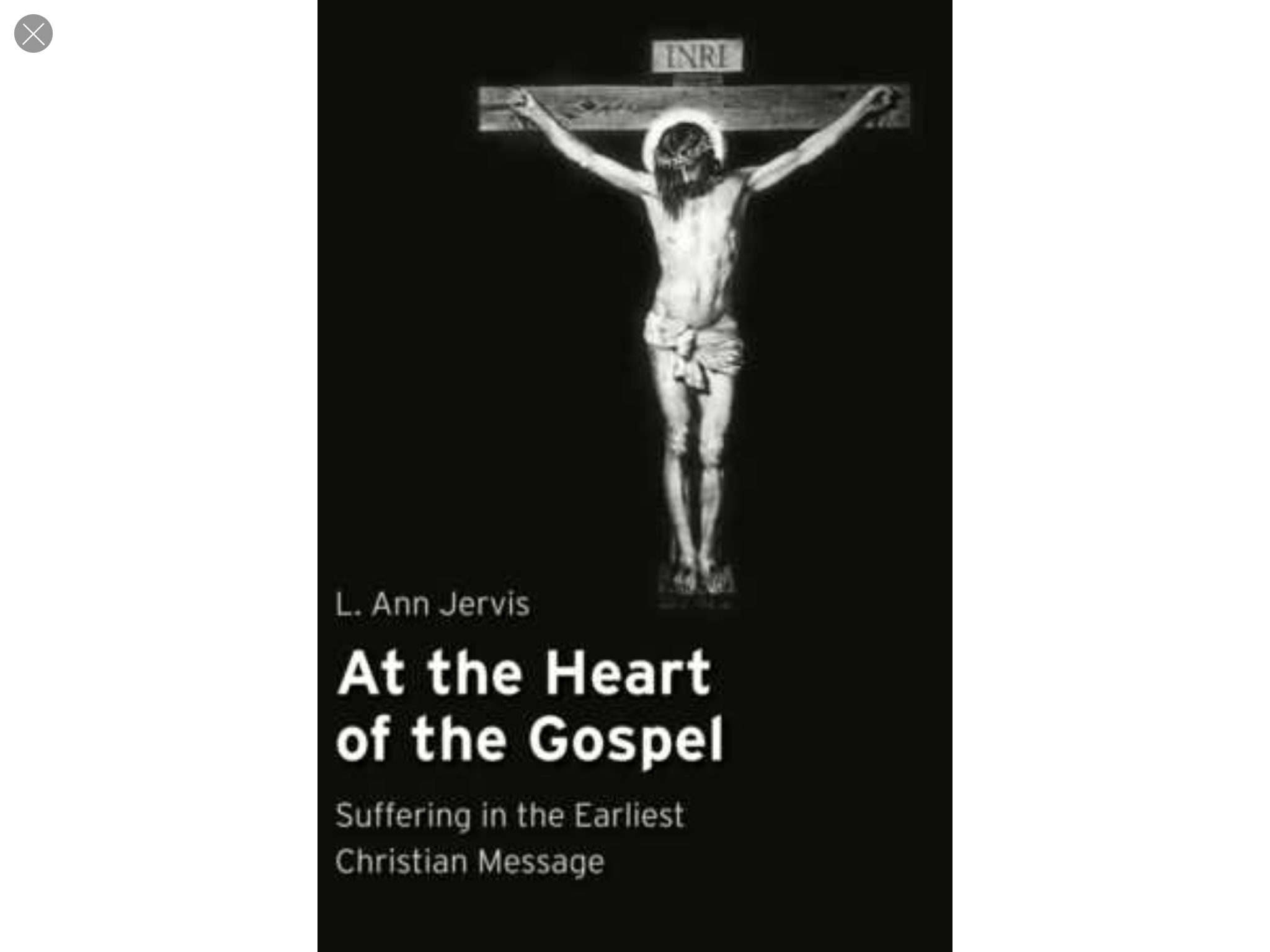
L. Ann Jervis’ At the Heart of the Gospel is a very worthy read. She looks at three of Paul’s writings observing the development of Paul’s understanding of suffering over the years. She exegetes 1 Thessalonians (an earlier letter), Philippians (written mid-career) and Romans (a seminal work of Paul’s) to describe the role of suffering in the life of the believer. This is a very rich book indeed.

Posted in Shepherding Well | 4 Comments

What is Success in this Shepherd’s Work We Offer?

Jeremiah was one of those books I loathed to read in my academic days. It was dry and oh so negative. Doom and gloom, over and over again.

images

Rembrandt’s Jeremiah

Many years later, Jeremiah has become a hero and even a mentor to me. It is literally one of my favorite books of the Bible. Interesting, though, Jeremiah did not see very much “success” in his work. Think on it for a moment. He was sent to the Southern Kingdom of Judah to warn them of impending ruin if they did not become more responsive to God and his word. Precious few received the message Jeremiah proclaimed, few listened. And the forewarned tragedy happened. Judah was sorely abused by the Babylonian empire.

So, was Jeremiah a “failure?” He did not have much to show for his work, did he?

A Larger Perspective
The main character in the book of Jeremiah is not Jeremiah. The word of God is the “main character,” if you will. The book is about how God’s proclaimed word works and acts upon God’s creation – Judah, the surrounding nations and even upon Jeremiah’s life. Those who receive the word are shaped by it. Life and blessing is what is offered. To those who reject God’s word, the word acts upon them too. It brings judgment and death. Jeremiah spoke the word that God had placed in him and the word did its work (see Jeremiah 1:11-12).

Reimagining Our Work and Measuring of Success
God has asked me to give my life to sheep who are scattered the world over doing amazing work in tough places. In that work I teach, preach, train, coach, mentor, guide, counsel, debrief, offer spiritual direction – I shepherd. Most often I come across people who are highly responsive to God and eager to learn. Sometimes not so much.

Our roles as shepherds is to take the person of Jesus to others. He is green pasture and  quiet waters; he is bread and wine; he is life and love. He is what we all need. As it has always been, some will feast upon him and rest in him. Others will scurry off and go back to their less than healthy ways. We have no control over that.

As for Jeremiah so for Us
We show up. We listen. We give. Some will receive and flourish even in the awfullest of circumstances and others will not. I am not the main character in my own story nor in my work of shepherding.

The world says success is measured by numbers – much, more, bigger, faster, better. I cannot measure success by how many frequent flier miles I have nor the number of invites I receive nor the number of people I speak to. “Success” is more about my communion with God, his presence and overflow in my life, and doing what he shows me to do. The rest is up to him. Be encouraged to trust God to be up to far more than any of us can see. He is watching over his word to do it. Of course, this same message can be carried to the sheep we tend to in extremely difficult, non-responsive regions of the world.

Posted in Shepherding Well, Thinking Well | Tagged , , , , , | 2 Comments

Living Well While on the Road

International Travel is Profoundly Wearing
I was sitting in a quiet room of an organization’s offices in Phnom Penh several years ago. By simply being present, people wandered in to “chat.” Those chats frequently turned into very deep conversations as people entrusted me with teammate conflicts, sexual struggles, fears, spiritual dryness, doubts, hurts, and frustrations. When a shepherd shows up, the sheep who need tending to will find them.

IMG_0681.JPG

Busy Istanbul Street

In my early days of this work I did not know any better (which means I had not run myself into the ground yet), I was pretty hard driving. Not wanting to be away from family too much, most of my trips were in the 12-14 day range, max. I had spent the money, the time and traveled all that way, I might as well pack my schedule to the brim. Right?

Well, I now take a more long range view. And a more relational view: The Father desires for us to be responsive to him rather need-driven. 

The Gift of Modeling For Others
There are too few healthy models of life-ministry done in a sustainable manner. The prevailing pattern is to go and go hard for a long time. One gift shepherds can extend to others is modeling a more rhythmic way of going about work. Each of the following tips which I have learned from others and from personal experience can be a means of giving permission to others to live within their limits.

The 2/3rd’s Principle
Please consider the idea of splitting your day up into thirds – morning, afternoon and evening. Try to make appointments during two of those three blocks each day. Of course, there are exceptions. Making this a pattern allows one to have some personal down time for play, rest and renewal. I know I will be fresh early in the trip, but I want to have something to give people at the end of my trip too.

Keep Your Sabbath
Even on shorter trips, it is wise to keep a Sabbath.  Their is the biblical reason: we do our work out of a delight in the Lord. Sabbath is a day to delight ourselves in him. That single day informs the other six days. There is also the modeling reason: too many workers do not take Sabbath seriously and the consequences are dire. You might not find a church to worship in, but you can find a tree or park bench or someplace to be still, rest and be attentive to God.

Buffer Time
After years of international travel I still show up pretty wiped out. So I like to take a day or two  at the front end of the trip to go easy, rest, and do fun stuff. I love wandering local markets or taking in any wild scenic areas. This is restorative for me, allows me to work the fogginess out of my head, and settles my heart to be with people.

These are but a few “tricks of the trade” I have gleaned as an itinerant shepherd. How about you? What lessons have you learned along the way that both tends to your long term health as well as models for others? I’d love to learn from you. Thanks!

Posted in Shepherding Well | 3 Comments

Spiritual Direction: Is it Legit?

 What’s Up with Spiritual Direction?
There are some in Evangelical circles who hold the practice of spiritual direction at arms length. “Is it even biblical?”, one might ask. Is this just another buzz topic from the prevalent “spiritual formation” movement? Or is this a viable skill set for shepherds?

I have been through a biblically grounded, Trinitarian, Christ-centered training in spiritual direction. I also receive spiritual direction, as much as I can, on a monthly basis. I find the input into my life invaluable. The unique contribution of spiritual direction has helped me to grow in my discernment and spiritual care of others. I am a better shepherd because of the direction I receive and the skill set at my disposal.

Below are helpful resources on the topic. Even if you are skeptically curious, I cannot encourage you enough to read Gordon T. Smith’s book. If you want more, then take a look at Morris Dirks’ offering.  Lest one think this is only a “catholic” practice, both brothers are protestant.  Plus, I list below two trainings you could look into.

Spiritual Direction that guides people toward union with Christ in reliance on the Spirit and the Word is a worthy skill for the accomplished shepherd. I argue it is a needed spiritual practice for anyone in ministry.

Spiritual Direction Resources
Like anything else out there, one must vet such recommendations. I seek to bring a Trinitarian, Christocentric, Biblical set of resources to such recommendations. But each of us must read critically and discern well.

Books
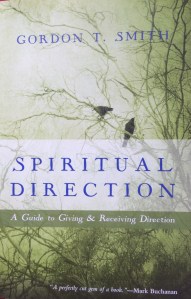
Spiritual Direction by Gordon T. Smith

Smith SD
I have read numerous books on the subject, this is the most solid I have read to date. I heartily recommend it. Smith is centered theologically and biblically in his writings (Called To Be Saints is another of his titles I strongly encourage to be devoured). He is Canadian, has a CMA background and previously lived and served in the Philippines for many years. This book’s text is a mere 90 pages, yet it is dense. Smith says a great deal with an economy of words. Even if you have no interest in spiritual direction, this is a great, concise read on central elements of spiritual growth.

Forming the Leader’s Soul: An Invitation to Spiritual Formation By Morris Dirks

Dirks
Dirks is based in the Seattle area and has a ministry aimed at ministry leaders. This book argues for the necessity of everyone in ministry needing spiritual input on a formal basis. Chapter 2 excellently details the systemic ill-health amidst pastors and other workers in the evangelical movement. His paradigm for spiritual direction is Ignatian, which many argue was a key reformation figure from within the catholic church in Southern Europe while Luther and others reformed further north. Though not as theologically steeped as Smith, it offers great practical helps.

Spiritual Direction Trainings
Sustainable Faith (sustainablefaith.org)

FullSizeRenderThis training is offered in many U. S. cites and has recently branched into a few European cities. Following a cohort model, this is a small group, highly relational model of training. I have been through this program and both enjoyed it and grew from it. I have also had the privilege of co-leading/training a cohort. It has shaped the way I engage people in my shepherding work.

Spiritual Growth Ministries Aortearoa New Zealand  (sgm.org.nz)
I do not have any personal experience with this training. One of our staff highly recommends it. Here are her comments to me: “It’s a two-year course in classical spiritual direction with a lot of practical application and internship. That’s one of the reasons I decided to go with it. Lots and lots of supervised practice. There is one five-day required workshop in NZ, but the rest is done via internet.”

I’d love to hear of other excellent trainings and resources you migth know of.

Posted in Resources, Shepherding Well | Tagged , , , , , , , , , | 4 Comments

Mining Wisdom from Life

©Scott E. Shaum 2015

Life Experience Does not Automatically Equate Wisdom
We all have many life experiences. However, going from life experience to life experience does not automatically make one wise. The book of Proverbs tells us that, looking through the grid of Scripture, reflecting on life experiences is a major source of growing in wisdom.

When our lives are crammed full of movement and activity, we miss out on much of what we experience. In Proverbs 1:20-23 wisdom is anthropomorphized as a woman who is standing on the busy street corner of life offering her gift. Yet the simpletons scurry on by to the next activity. If one will just stop and consider, wisdom can be gained. We have sight, but we often do not see well. We hear, but we do not listen.

Wisdom is Yet Another Loss Due to Busyness
Let me give you an example. A few years back I was in on the writing of a survey for field leaders. One of the questions was how much time leaders spent reflecting on crucial issues they are facing? The number was not surprising. Yet it was alarming. It was somewhere near nil. They were simply too busy to take the time to reflect on the crucial elements before them. The ability to make wise choices is lost due in part, to constant, compulsive busyness.

Reflection is a Wise Practice
Taking time regularly – at least weekly – to ponder what we have seen, heard, felt, read, and experienced is a wise practice. Our everyday mundane life is a veritable gold mine of wisdom. But we must mine the wisdom out of life.  How much time do you take to reflect? Who in your life helps you learn from life?  In your shepherding of others, how are you guiding others to reflect upon their life? Are you coaching people in this wise practice?

IMG_7280 (1)

Photo: ©Scott E. Shaum 2015

Reflection is a Simple Practice
Consider a time of the week where you might be able to spend a good chunk of time, 2-4 hours, alone. It can be helpful to get away from your normal environment, maybe head to a coffee shop or park. I like to take time during my early Sabbath morning to reflect.

How do you process well? Walking? Writing? Laying on your back pondering toward the heavens? Doing something with you hands like gardening, cooking, or woodworking? These are all viable environs for reflecting. Stillness is best though. Other than time and removal of stimulus (i.e. put that phone and email away), a key ingredient is good questions. I have collected a list of them over the years. Here is a sample. Be a collector of good questions.

Reflective Questions:
How have you experienced God lately?
How are you responding to God’s initiative?
What or who are you avoiding? Why? How might you lean in?
Has anyone spoken something significant to you recently that caught your attention?
Who do you need to spend time with? How might you do that?
What is God inviting you to?
What have been your primary emotions this week?
What have you found yourself praying?

Shepherds: Be a promoter of personal reflection. Most people simply need permission, some simple skill coaching, and a list of questions. Follow up with them to find out what they have been learning. Promoting this practice is one way to encourage life-long learning.

Anyone have some good reflective questions or practices to share?  Thanks for commenting.

Posted in Living Wisely, Personal Vitality, Shepherding Well, Spiritual Vitality | Tagged , , , , , , , , | 3 Comments