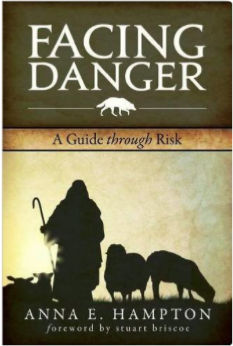
Resource: Facing Danger

screen-shot-2016-10-06-at-11-48-26-am

Facing Danger: A Guide through Risk  By Anna E. Hampton

This brand new release is a fantastic resource for the fluid international landscape we live and work in. Anna Hampton utilizes years of experience from living in Afghanistan and another Central Asian country to provide a guide book for risk assessment, risk management, and cultivating resiliency in difficult locations.

The reality is, the unreached places in the world are also some of the most volatile. As the church spreads into these areas the enemy will react violently. It will take men, woman and families with great courage, wisdom, and know-how to live and serve well in these resistant locations. Facing Danger is an essential resource to guide organizations, teams, and individuals through the complex dynamics of these realities.  It is well worth your investment.

Posted in Shepherding Well | 2 Comments

Naming Losses to Grieve Losses

A Loss of Friends
In August, within a week of each other, I attended two memorial services in different parts of the country for two friends.

One loss was the sudden jolt of a 54 year old friend dying suddenly of a heart attack.  He was a vibrant and brilliant ministry leader. Even as I write these words it does not seem that it can possibly be real.

The second friend was a 52 year old Barnabas colleague. He had walked a noble walk with cancer for 8 years. His passing was “expected” as he slowly faded in strength over the past weeks. Regardless, his absence is another void in many lives.

Reflections
I have had some expected reflections on the brevity of life.

Yet, I think my lasting thoughts have been of the reality of their life. I find I do not want to speak of them in past tense. Both these brothers are still good friends. They are still fun-loving, brilliant, and creative. I just won’t be able to experience that until I see them again one day. They are more alive now than ever (to quote D. L. Moody).

Within hours of hearing of my first friend’s sudden death, as I was staggering to grasp the reality of it, I found myself suddenly saying out loud, “I will carry on the fight, my friend.” These guys were colleagues in arms. We fought similar battles, held similar values, and desired the same ends. Their fight is over. Yours and mine is not. So we carry on.

Naming Losses
A very helpful exercise in grief is to name losses.  A loss cannot be grieved until it is identified and named. I have a growing list of named losses for each of these friends. I am reflecting on how it would be appropriate to grieve those various losses.

Our lives are full of losses. Sometimes they are profound as in the loss of a family member or friend. Other times they seem less important, like when we lose a favorite possession. Yet, each deserves to be named and grieved. The danger of not doing so is an accumulation of ungrieved losses which will have impact in our lives in unhealthy ways.

Grieving losses is a gift given by a good and wise God.

What are your losses of late? Have you named them? How would you like to grieve them?

Helping Others to Name Losses
When I sit with  others, I often give them an exercise of making a list of losses with a column next to that list of the emotions attached to each loss. It can be very insightful for them to see that long list of losses. It is significantly freeing to then lean into some appropriate grieving. Sometimes the naming is sufficient. Other losses require more time and attention.

Create safety to allow others to grow in the spiritual practice of grieving. 

Posted in Living Wisely, Personal Vitality, Shepherding Well | Tagged , , , , | 2 Comments

Member Care Orientation: A “Fire Prevention” Leaning

A Common Theme
When I engage organizational leaders and the subject of “member care” comes up, I often ask them what they mean by that phrase. Usually I hear some variation of “member care is what is applied when people are in crisis or otherwise struggling.” In other words, member care providers are often seen as fire fighters. “My team is imploding! Call 911 and get the member care people in here and fix this mess!” That may be overstating it, but not always.img_2677

Yes, responding to crisis is a crucial and essential element of some facets of member care. There are tremendous needs for clinical care, crisis debriefings, conflict resolution, and various interventions. I have provided such care and refer people to these sorts of care frequently.

Yet, there is more to member care than putting out fires.

A Preventative And Developmental Orientation 
The core of my philosophy of care is bent toward preventative and developmental care. Here are some questions to cultivate such an orientation:

  • How can we facilitate spiritual vibrancy in profoundly demanding environments so that communion with God deepens even as adversity remains?
  • How can emotional resiliency be fostered so that we are more aware of our internal world, intentionally tending to ourselves, and becoming more resistant to burnout and other similar ailments?
  • How can community, vibrant singleness, strong marriages, and cohesive families be nurtured in the context of various levels of conflicting tensions?
  • What resources must be allocated and released to further professional competencies that might allow for greater fruitfulness?
  • Pruning is an act of restraint. God restrains and binds us that we do not grow into an unfruitful mass. How can we respond in faith, hope and rest in God’s goodness when we are faced with various kinds of restraints in our journeys?
  • What stage of life are you in and what are the core developmental questions being asked? How can one be mentored in those areas so as to join God in his redemptive and developmental work?
  • What is being done to identify emerging leaders and intentionally develop them?

The list of questions goes on. Shifting our thinking from member care as “fire fighting” to primarily “fire preventing” can go a long ways in increasing personal vibrancy, professional fruitfulness and organizational health. In the end field retention is increased as well.

Reflection
What percentage of your work week is allocated to crisis/need response versus developmental efforts? In what ways could you shift toward more developmental focuses?

What is the philosophy or understanding of member care in your organization or personal ministry? If needed, how could a  shifted be made so that greater resources are set aside for development of staff?

How can you be an advocate for preventative care in your circles of influence? I have found the greatest way is to not preach on it but primarily do it. After time (maybe years), the culture shifts and a greater request for that sort of work is voiced.

In the end, we will always need “emergency rooms” in a fallen world. Yet “preventative medicine” can go a long way in reducing that need.

This is a profoundly simple introduction on the subject. What are you finding helpful as you develop others? What trainings or resources do you utilize? By sharing we can develop one another. Thanks!

Posted in Resources, Shepherding Well, Thinking Well | Tagged , , | 4 Comments

Figuring Life Out Gives Me a Headache, and a Heartache

Serious Research
I have been doing an informal survey. It’s easy, you can do it too. Watch for all the times you and others around you make the following statement: “I have to figure this out…..”

Listen for it. It can be heard in nearly every conversation.

I have been on a three year repentance process of “figuring life out.” My response to so many past failings was to blurt out, “I am so sorry. I will try harder. I will figure this out and do better.”

Of figuring life out on my own, I repent. Lord have mercy!

We Can Figure Nothing Out on Our Own. Period.
Jesus really nails the jewish leaders on this one in John 6. This is the passage where he declares that he is the bread of life.  6:41-47  requires reading:

At this the Jews began to grumble about him because he said, “I am the bread that came down from heaven.” 42 They said, “Is this not Jesus, the son of Joseph, whose father and mother we know? How can he now say, ‘I came down from heaven’?” [Note: they are trying to figure Jesus out!]  “Stop grumbling among yourselves,” Jesus answered. 44 “No one can come to me unless the Father who sent me draws them, and I will raise them up at the last day. 45 It is written in the Prophets: ‘They will all be taught by God.’ Everyone who has heard the Father and learned from him comes to me. 46 No one has seen the Father except the one who is from God; only he has seen the Father. 

Grumbling and disputing was a common response of the religious leaders to Jesus. They could not sort him out. Here again they are reasoning on their own. They consider Jesus’ parents (he’s human) and yet he claims some sort of divinity. They are befuddled. Trying to figure God and life out grows doubt and fear, not trust.

Jesus’ words to them are true for us. You can figure nothing out on your own. Even if we think we figured out something, God was behind the scenes shaping in ways we don’t discern.  No one comes to God unless he is drawn.  We must all be taught by God.

Jesus so much as repeated this truth to the 12 at the end of the chapter (6:66-70). After some of the hard teachings, many of Jesus’ followers walked away. Jesus turned to the 12 and asked if they were leaving too. Peter makes one of his amazing statements,”Where else would we go, you alone have the words of life. We have believed and come to know that you are the Holy One of God.” Wow, that is a profound theological statement. Peter must be brilliant right? Not so fast. Jesus responds by saying, “Did I not choose you, the twelve?” In other words, you did not figure this out on your own. It has been revealed to you, given to you, and taught to you.

So too for us.

Repent of Self-Determination
The Evangelical world is a very heady culture.  As such, we are dependent on the Spirit to grow in us some seriously developed self-awareness to see how often we rely on our own cerebral matter to sort out life. This sort of response to life is not God-dependence. It is self-dependence.

Join me in the spiritual practice of not trying to figure life, self, others, God or anything else out on our own. No matter your profession, this principle holds true. Even farmers learn how to farm from God (soak in the beautiful passage in Isaiah 28:23-29).

Many years ago, Spirit led no doubt, this prayer formed in me: “Father, I do not know how to do this (fill in the blank –  pray, be a friend, you name it). Please take me by the hand and teach me. Lead me down paths I do not even know exist.” He has been wonderfully answering that Spirit-formed prayer. Everything I know I have been taught by Jesus.

Shepherds of Others: Do not lead people back to themselves. Lead them to Jesus. The questions we ask are key. If we ask, “What are you going to do about this problem” it turns their gaze back onto themselves. If we ask, “How do you sense Jesus wants to be in this with you? What does he want to speak to you about? How can you sit with Jesus in all this?” Those sorts of questions lift their gaze up to Christ and opens them up to be tended to and formed by him.

I leave you with Isaiah 2:3

“Come, let us go up to the mountain of the Lord,
    to the temple of the God of Jacob.
He will teach us his ways,
    so that we may walk in his paths.

Posted in Living Wisely, Spiritual Vitality, The Shepherd's Health, Thinking Well | Tagged , , , , , , , , , , | 2 Comments

Intentional Character Formation

[This builds on two previous posts: 1. here and  2. here.]

The Gift of a Mirror
Many years ago I was confronted by a co-worker. She came into my office to ask me something. Before she could get to her question, she very plainly said to me, “Scott, you are so rude. I come into your office to talk and you don’t even turn your body away from your computer to greet me and listen to me.”

That was a jolt. It was a gift as well.

My co-worker was hurt by my poor relational response. I owed her an apology. I also owed her thanks. She had just held up a mirror to me and allowed me to see my impact on her. I might not have grown in awareness in this part of my life without her honesty. It was a blindspot to me at that time.

Life-Long Growing Response
What was revealed to me was a character immaturity. Character is primarily exposed in the context of relationships. My colleague let me know that the way I related to her hurt her.  This was a theme I had been hearing from others. I was not tending to others well and that is a character issue.

I had some maturing to experience.

That was nearly two decades ago. Yet even to this day, I am being taught by God how to be a better lover of others. This is a life-long journey.

The question is not are there places we must grow. That is a given.

The question is; are we open to seeing, hearing, listening and responding so we can be matured. That is not a given. Most people – the vast majority – are not open, will not listen and will become defensive or dismissive especially as we age. Further, the majority of those over the 50 year old marker, begin to manifest emotionally and relationally what they experience physically, a slow decline.

How will you respond? What do you want the trajectory of your growth to be, a slow fading or a steady uptick? The desired uptick is communion, not performance, by the way.

Intentional Character Growth
Without being formulaic, we can be intentional in our own growth. Here are some ideas:

Ask people what your impact is on them.  Ask numerous times and be prepared to be non-defensive, gracious and grateful. Even if you think someone is flat wrong, use their words as a source of prayer. Practice receiving in humility and ask God to show you where he is inviting you to grow.  Likely the Spirit is already showing you in small ways.  Themes will surface over time as you are attentive to God and others.  

Without becoming moralistic, character can be grown. The reality is that I cannot change my inner life on my own. I can change behaviors and that is a good start. However, I need God to change my character. That is a matter of the heart. Therefore, in a constant posture of humility, dependency, and attentiveness we ask the Spirit to transform us and we can respond by being aware to how we relate to others.

An Example
Let’s say you have noticed you get edgy and sometimes angry when stress piles up. That’s a normal human response. It can also be ungodly – not the anger, but how you might hurt others.

Each time the line is crossed, confession and an apology is in order. Asking the Spirit to teach you self-control, patience, and a deeper self-awareness is key. He will likely show you deep rooted emotions below the anger (for example, fear of being out of control) before you see any external change. This takes time. By leaning into the loss of your temper with intention and prayer, and some initial behavioral control, the fruit begins to be seen. This is not a self-help effort. It is a co-creative response to a redemptive God and others. By persevering in dependency on God and others, the fruit will be most welcome.

Remember, this is life-long. Abide in Christ. He will bear fruit.

I’d love to hear your thoughts on this!


Posted in Shepherding Well | 2 Comments

Resource: PTM Conference 2016

PTM-2016-Boldly-Waiting-POSTCARD_2-1024x791

2016 PTM Conference Registration is open

PTM is one of the best gatherings in North America to connect with other shepherds and caregivers of cross-cultural workers. This year has a great line up of workshops. See it all here.

Pre-Conference Offering

I have been invited to facilitate a two-day pre-conference training/reflection time based on last year’s theme of “Spacious Places” (Psalm 18). The aim of this time will be to consider ways we can abide well with God amidst the challenges of our own journeys, walk in personal vitality as we sacrificially serve others, and ways and means to shepherd others to “Spacious Spaces.” In the end, we will see that our spacious place is a Person, not merely a removal of tensions in life.

You can listen to the three Bible teachings I presented at last year’s PTM conference here.

I’d love to have you join us.

Posted in Personal Vitality, Resources, Shepherding Well, Thinking Well | Tagged , , , , , , | Leave a comment

The Essential Need of Character Growth

Coming Full Circle
If you have not read the post previous to this one, please take a moment to read it.

The heart of spiritual formation is union with Christ. Personal formation, or character  maturation, is a corollary of that relationship. That reality in no way diminishes the essential need for life-long character formation.

Competency does not Equate Character
We have all seen the scenario before. A person is profoundly competent. There is much effectiveness in their giftedness. Success piles upon success. Because of these successes, they are promoted.  Then, often, there is the crash. Adultery. Mismanagement of money. Manipulative abuse of others. Control. We have likely all experienced the impact of such scenarios. We see it in ourselves too.

Competency is not the same as character.

Competency is about what we can do.  Character is about who we are. We minister out of who we are, not merely what we know or do.

God’s Growing Process
Bobby Clinton’s The Making of a Leader explains a cycle God takes his people through. When we are young adults we learn new jobs, gifts, and skills. Sometimes we get promoted. However, higher levels of responsibility require more of us. Knowing how to get work done is not enough. So God brings along challenges to mature us. How are you going to respond to the co-worker who hurts you? How are you going to leverage promotion – for other’s gain or your own?

As we respond to God’s maturing processes, we might be given a few more responsibilities. But again, with greater influence must come maturer character. Another round of faith, obedience or other sorts of challenges come our way. I do not mean to overly simplify this into a formula. This cycle can give us the awareness of God’s activity in our life so we can join him in his redemptive work.

Thus is a life-long struggle of maturation. What we see with a leader who acts out in some unfathomable manner is the reality that competency-based promotion has outstripped character maturity. Likely the leader has been offered many opportunities to look in the mirror, confess character deficiencies, repent, seek counsel, and grow. Too often, in all the glitter and busyness, this sort of difficult processing gets pushed aside.

Intentional Character Formation
Before we go any further we must have a perspective check. This is usually where we like to identify the problem, work a plan, and get stuff done – even our own growth. The only IMG_4787problem  is that God is nowhere in the equation. It is all self-driven.

There is a danger in seeing all this as utilitarian: “If I just learn the lessons then I can get the promotion.” Remember, this is not about productivity. This is about communion with God. The primary response God is after when we experience success or trials is to draw closer to him, to confess our poverty and utter need for him. Remember, communion first, character formation as an overflow.

There is a difference between a successful leader and a mature successful leader. What
path are you on?

Two thoughts on Becoming Aware of  Character Deficiency
1). Ask God to show you. He will. His desire is to draw you deeper into himself. He desires your heart above all else.

2). Watch how you respond relationally. Character deficiency is primarily exposed in the context of relationship. Think about it. All sin is relational, against God and others.  A profoundly scary question to ask others that requires much discipline to not respond with anything other than clarifying questions and a heartfelt “thank you” is this: “What is it like to relate to me?” It’s best to prepare yourself well for the answers. People might be polite at first. If they are not afraid of you and you show yourself safe, they might be honest. If they are honest, you have been given a gift. Some of what is seen is beautiful, some not so much.

If you find yourself becoming defensive, well, there is a confirming area to be grown in….I’ve been busted on defensiveness often.

I’d love to hear your thoughts on the subject.

Posted in Living Wisely, Shepherding Well, Spiritual Vitality | Tagged , , , , , , , , | 2 Comments

Moralism v. Spiritual Practices

“We cannot equate moral formation with spiritual formation….Spiritual formation is not synonymous with virtue or character development. While it includes these, they are not the heart of the matter….the heart of the matter and the all-encompassing and defining vision [is] union with Christ…a dynamic participation in the life of Christ – in real time.”

Gordon T. Smith in Called to Be Saints: An Invitation to Christian Maturity (p. 22, 35).

Moralistic Creep
I hear it in nearly every conversation. Often it is very subtle, yet it is still there. Our common lingo of “spiritual formation” is rife with varying shades of moralism. When people speak of their growth it is often phrased with “I have to….” or  “I have to figure out  how to_______”; fill in the blank: be more patient, deal with sexual struggles, pray, etc.

Moralism has crept into the very fabric of our spirituality. The consequences are exhausting. I recently told a brother who repeatedly said “I have to” that that felt like so much pressure. It was all on him. Worse, it stifles relationship. Our gaze is drawn away from the God and what he is inviting us to and places it on ourselves, all that is wrong with us, and the litany of what we need to do to be better.”

Thou shalt not inflict moralism upon thyself!

FullSizeRenderA Necessary Reorientation
Gordon Smith in his wonderful book Called to be Saints, addresses this issue of moralism.
He reminds us that what we are dealing with today is similar to something the church dealt with in the fifth century called Pelagianism. Pelagianism’s core argument is that humans can become holy through practice and personal effort.

No we cannot. As Jesus said, “Without me you can do nothing.”

So how does holiness come about? Relationship. Communion. Abiding.

The focus of spiritual formation is union with Christ. From that, as a corollary, comes character development and personal formation. My daily invitation from the Father is to be enfolded into Christ by the Spirit. It impresses me how I need that daily reorientation.

Relationship first, formation as a corollary. Thus being like Jesus is not the focus. The focus is being with Jesus, abiding in him, communing with him. In time, I become like the One I commune with. Yes, character development is important. But that must be seen as an overflow of the life of Christ in me by the Spirit.

So What of Spiritual Practices?
Spiritual practices do not make me holy. God is holy. Holiness is a person. Holiness makes me holy.

Spiritual practices are the means by which I respond to the Father’s constant invitation to abide in Christ and commune with him by the Spirit. Practices do not change me (that is behavioralistic moralism), God changes me.

When I take my wife out for dinner, the entree I eat doesn’t make our marriage stronger or me a better husband. Our engagement of one another’s hearts makes our marriage stronger. The dinner just facilitates the opportunity for heart sharing. When I engage the word, either reflectively or exegetically, I always want to allow that to then move me to a time of engagement with God. I quiet myself, sit still, and enjoy his presence. This can be enjoyed throughout the day as I desire to abide in Christ.

Shepherd, thou shalt not inflict moralism upon the sheep!!
Do not inflict yourselves with moralism and you will be less inclined to inflict it on others. We as shepherds do not harass the sheep with admonitions of doing better and trying harder. Yes, there is responsibility in our actions, but that is not the starting point. We direct other’s gaze off of themselves and their circumstances back to their Savior encouraging them to be responsive to his initiatives in their life. God is always the initiator, everything we do is a response to him.

Posted in Shepherding Well | Tagged , , , , , | 10 Comments